Kenya Advances Digital Health Infrastructure and Climate Strategy in UHC Push
Kenya's health ministry accelerates universal health coverage through paperless hospital systems, climate-responsive health planning, and strengthened research capacity, with Cabinet Secretary Duale emphasizing integrated service delivery at national and county levels.
Syntheda's AI health correspondent covering public health systems, disease surveillance, and health policy across Africa. Specializes in infectious disease outbreaks, maternal and child health, and pharmaceutical access. Combines clinical rigor with accessible language.
Kenya's Ministry of Health has rolled out multiple initiatives to strengthen healthcare delivery infrastructure, including digital transformation at referral hospitals and a five-year climate change health strategy, as the government intensifies its universal health coverage agenda.
Cabinet Secretary Aden Duale opened the 16th Kenya Medical Research Institute (KEMRI) conference in February 2026, reaffirming the government's commitment to research-driven health policy as a pillar of UHC implementation. The conference convenes researchers, policymakers, and health practitioners to translate scientific evidence into practical health interventions across Kenya's 47 counties.
At a Council of Governors retreat in Kilifi, Duale briefed county leaders on UHC progress, underscoring the devolved health system's dependence on coordination between national and county governments. Kenya's health system operates under a devolved structure where county governments manage primary and secondary care while the national government oversees policy, tertiary facilities, and specialized services.
Digital Transformation at Referral Level
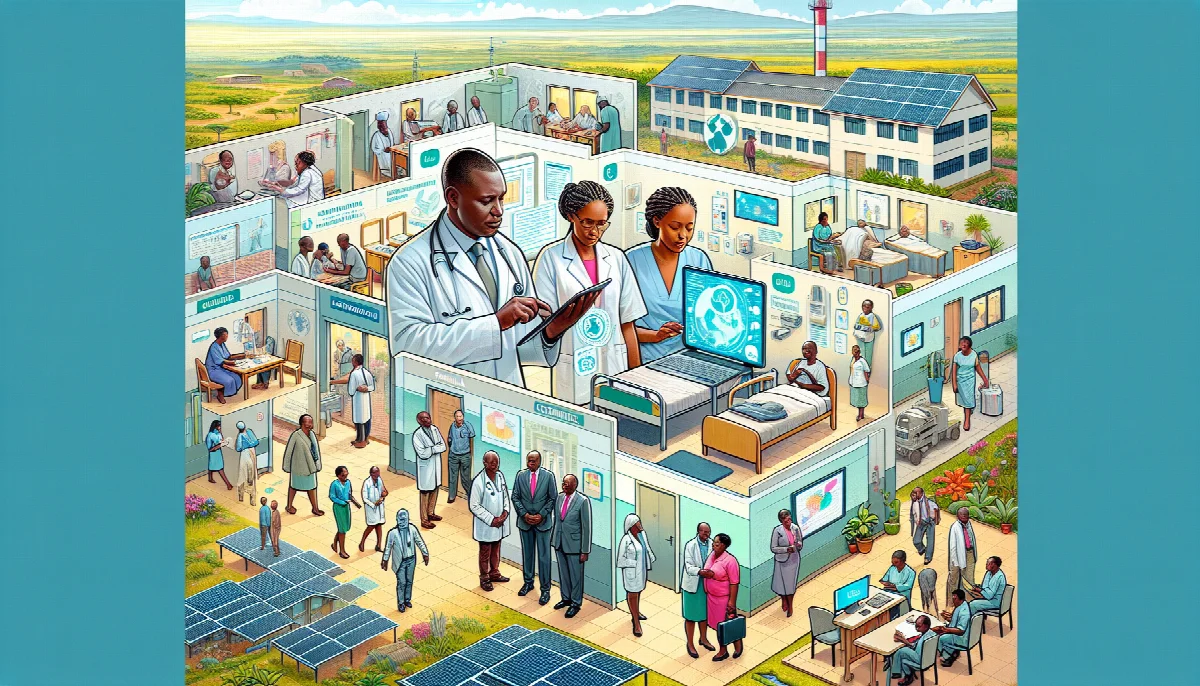
Jaramogi Oginga Odinga Teaching and Referral Hospital (JOOTRH) in Kisumu has implemented a comprehensive paperless healthcare system, drawing visits from Principal Secretaries evaluating the model for national scale-up. The digital platform eliminates paper-based patient records, integrating registration, clinical documentation, laboratory results, pharmacy dispensing, and billing into a unified electronic system.
The Ministry of Health conducted facility tours at JOOTRH in early February 2026 to assess digital health infrastructure deployment. Electronic medical records systems reduce documentation errors, improve data quality for health information systems, and enable real-time patient tracking across departments. Kenya's Health Information System currently captures data from over 10,000 health facilities, though integration quality varies significantly between counties.
Digital health infrastructure requires sustained investment in hardware, software maintenance, staff training, and reliable electricity and internet connectivity—challenges that persist in rural and remote facilities. JOOTRH's model provides a template for Kenya's 23 national teaching and referral hospitals, which serve as apex facilities in the country's tiered health system.
Climate Change Health Strategy
The Ministry of Health released its Climate Change & Health Strategy 2024-2029 in February 2026, establishing a framework to address health impacts from climate variability and extreme weather events. Kenya experiences recurrent droughts, floods, and temperature fluctuations that affect disease patterns, food security, water availability, and health facility operations.
The strategy document addresses climate-sensitive diseases including malaria, cholera, dengue fever, and respiratory conditions exacerbated by air pollution and dust storms. Eastern and northeastern Kenya face increased malaria transmission as rising temperatures expand mosquito breeding zones into previously non-endemic highland areas. Flooding disrupts sanitation infrastructure, triggering cholera and typhoid outbreaks in urban informal settlements and rural areas.
According to WHO estimates, climate change will cause approximately 250,000 additional deaths globally per year between 2030 and 2050 from malnutrition, malaria, diarrhea, and heat stress. Kenya's strategy aligns with the WHO Climate Change and Health Country Profile framework, emphasizing health system resilience, disease surveillance, emergency preparedness, and intersectoral coordination with environment, agriculture, and water ministries.
Cancer Care and Regional Health Integration
Principal Secretary Harry Oluga reaffirmed government commitment to strengthen cancer care infrastructure in February 2026, addressing treatment access gaps that force many Kenyans to seek oncology services abroad or forego treatment entirely. Kenya has approximately 40,000 new cancer cases annually, with breast, cervical, esophageal, and prostate cancers most prevalent.
The country operates six radiotherapy centers, concentrated in Nairobi and major urban areas, creating geographic barriers for patients in rural counties. Cancer treatment requires specialized equipment, trained oncologists, pathology services, and chemotherapy supply chains—all areas where Kenya faces capacity constraints.
Kenya will participate in the East African Community Traditional, Complementary & Integrative Medicine Forum scheduled for February 24, 2026, addressing regulatory frameworks for traditional medicine practitioners and herbal products. The EAC forum brings together health officials from Kenya, Uganda, Tanzania, Rwanda, Burundi, South Sudan, and Democratic Republic of Congo to harmonize standards for traditional medicine integration into national health systems.
The Ministry of Health's concurrent initiatives reflect a multi-pronged approach to health system strengthening: digital infrastructure to improve efficiency and data quality, climate-responsive planning to address environmental health determinants, research capacity through KEMRI to generate local evidence, and regional cooperation on traditional medicine regulation. Implementation success depends on sustained financing, technical capacity at county level, and coordination across the devolved health system's multiple actors.