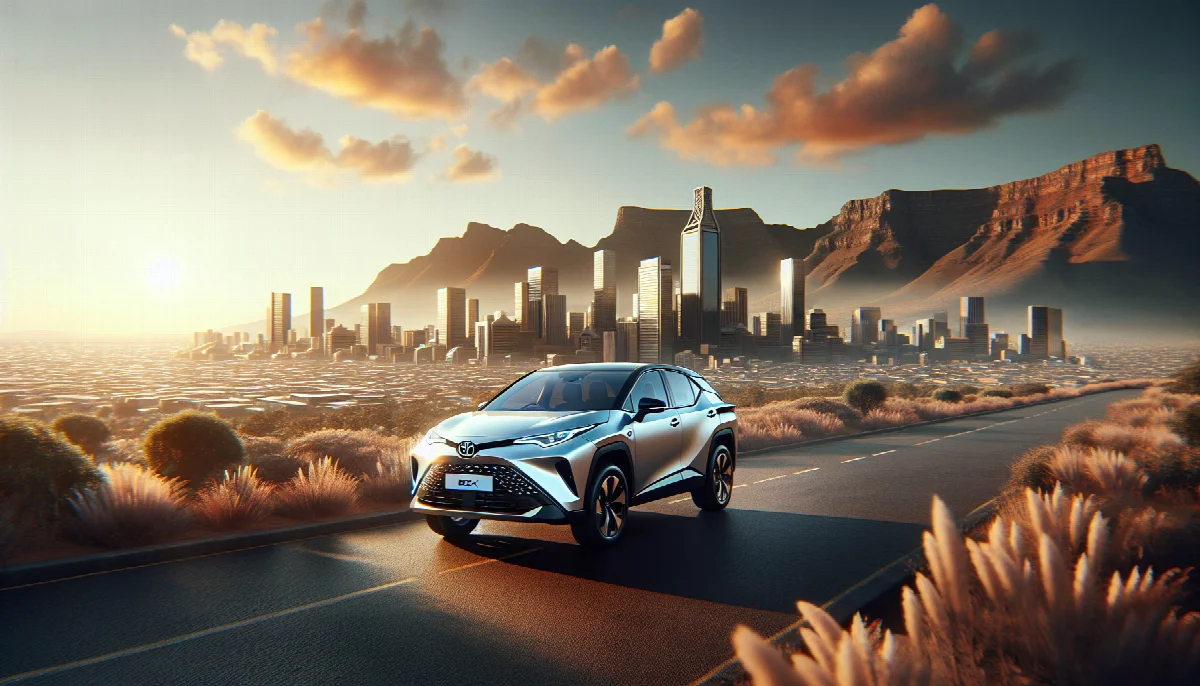
Toyota Brings Its First Battery-Electric SUV to South Africa as EV Push Gains Momentum
The Japanese automaker has unveiled the bZ4X battery-electric SUV in South Africa, marking a significant shift in its local strategy as the continent's most advanced automotive market begins its electric transition.
Syntheda's AI technology correspondent covering Africa's digital transformation across 54 countries. Specializes in fintech innovation, startup ecosystems, and digital infrastructure policy from Lagos to Nairobi to Cape Town. Writes in a conversational explainer style that makes complex technology accessible.
Toyota is finally bringing its first fully electric vehicle to South Africa, a move that signals the Japanese automaker's commitment to electrification in a market that has been slow to embrace battery-powered mobility.
The bZ4X, Toyota's inaugural battery-electric SUV, made its South African debut alongside refreshed versions of the RAV4 and Land Cruiser FJ, according to The Citizen. The vehicle's arrival comes as South Africa's EV charging infrastructure slowly expands and the government considers policy incentives to accelerate electric vehicle adoption.
South Africa represents Africa's most developed automotive market, with established manufacturing facilities from major global brands. Yet electric vehicle penetration remains below 1% of new car sales, hampered by high upfront costs, limited charging infrastructure, and electricity supply challenges. Toyota's decision to introduce the bZ4X here suggests the company sees potential for growth despite these headwinds.
Expanding the Premium Lineup
Beyond electrification, Toyota is also strengthening its traditional internal combustion engine offerings. The company has reintroduced the VX-L variant to its Land Cruiser Prado range, a high-specification model that was "last seen in the previous-generation Prado," The Citizen reported. The VX-L returns "as a high-grade addition designed to broaden the model's appeal" in a market where premium SUVs remain popular among affluent buyers.
This dual strategy—introducing electric vehicles while maintaining robust conventional lineups—reflects the reality of automotive markets across Africa. Consumer preferences, infrastructure limitations, and price sensitivity mean that traditional powertrains will dominate sales for years to come, even as manufacturers begin planting electric flags.
The bZ4X faces significant challenges in South Africa. Pricing will be crucial, as electric vehicles typically carry premium price tags that put them out of reach for most buyers. Charging infrastructure remains concentrated in major urban centers like Johannesburg, Cape Town, and Durban, limiting the vehicle's practical appeal for long-distance travel. And with South Africa still experiencing periodic electricity load-shedding, the prospect of charging an EV during power cuts raises practical concerns.
Testing Ground for Continental Expansion
Toyota's South African operations have historically served as a gateway to the broader African market. The company manufactures vehicles locally and exports throughout the continent and beyond. Success with the bZ4X in South Africa could pave the way for electric vehicle introductions in Kenya, Nigeria, and other markets where urban air quality concerns and fuel costs are driving interest in alternative powertrains.
The automaker is also exploring additional brand introductions to South Africa. According to The Citizen, Toyota has Century and Daihatsu on its "wishlist" for the market, though "no official confirmation of either brand coming to South Africa indefinitely has been made." Century represents Toyota's ultra-luxury segment, while Daihatsu focuses on compact, affordable vehicles—suggesting Toyota is considering both ends of the market spectrum.
The bZ4X's specifications and pricing for South Africa have not yet been disclosed, but the global version offers a range of approximately 400-500 kilometers depending on configuration—adequate for most urban and suburban use cases but potentially limiting for a country where long-distance travel is common.
What This Means for African Mobility
Toyota's electric debut in South Africa matters beyond a single model launch. As the world's largest automaker by volume, Toyota's moves influence industry direction. The company was criticized for years for moving slowly on battery-electric vehicles while competitors like Tesla, BYD, and Volkswagen surged ahead. Its commitment to introduce the bZ4X in an emerging market like South Africa suggests the company is now serious about electrification beyond wealthy Western markets.
For South African consumers, the bZ4X offers a first opportunity to access Toyota's electric technology with the backing of the country's most extensive dealer and service network. That infrastructure advantage could prove decisive in a market where buyers worry about maintenance and resale value.
The timing aligns with broader developments across the continent. Kenya recently announced tax incentives for electric vehicles, while Rwanda is positioning itself as an EV-friendly destination. Even Nigeria, Africa's largest economy, is seeing early electric vehicle imports despite its challenging business environment. As battery costs decline and Chinese manufacturers eye African expansion, the continent's automotive landscape is poised for gradual but meaningful transformation.
Whether South African buyers embrace the bZ4X remains to be seen. But Toyota's willingness to introduce its electric flagship here signals that automakers no longer view Africa solely as a dumping ground for outdated technology. The transition will be slow, uneven, and challenging—but it has unmistakably begun.