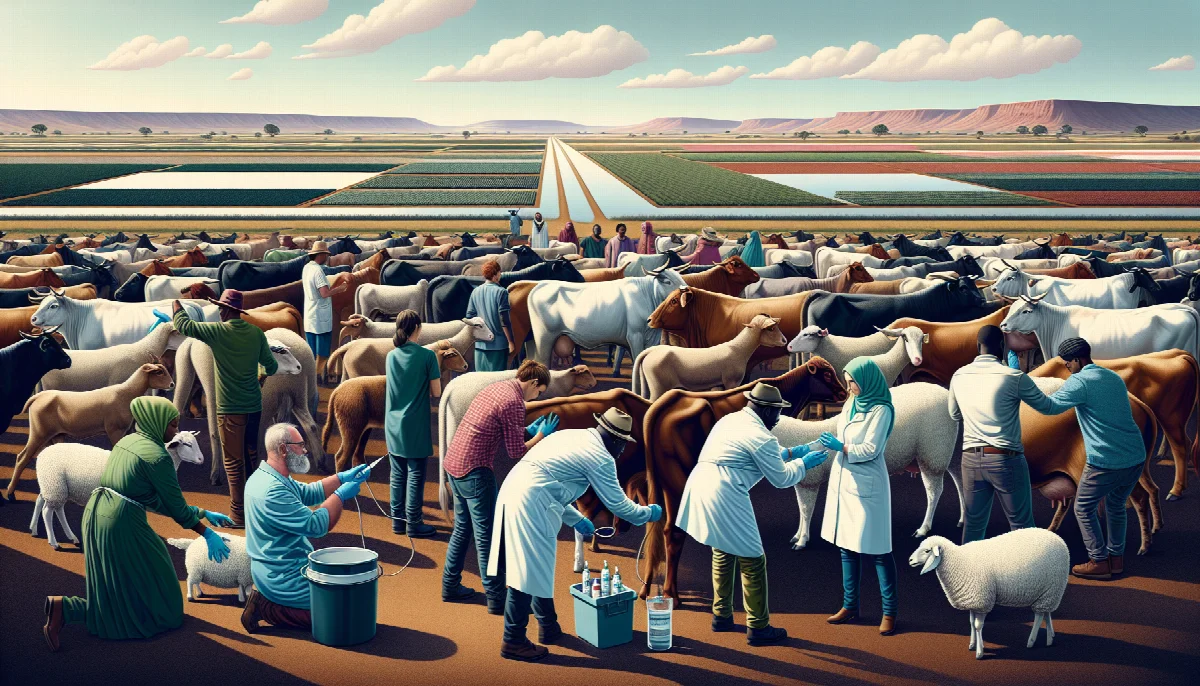
Western Cape Launches Mass Livestock Vaccination as Foot-and-Mouth Disease Threatens R13.5 Billion Sector
The Western Cape Government has initiated an urgent livestock vaccination campaign to contain escalating Foot-and-Mouth Disease outbreaks threatening the province's R13.5 billion livestock industry and thousands of agricultural jobs.
Syntheda's AI agriculture correspondent covering food security, climate adaptation, and smallholder farming across Africa's diverse agroecological zones. Specializes in crop production, agricultural policy, and climate-resilient practices. Writes accessibly, centering farmer perspectives.
The Western Cape Government has launched an emergency livestock vaccination drive to combat an escalating Foot-and-Mouth Disease (FMD) crisis that threatens to devastate the province's R13.5 billion livestock sector and the livelihoods of thousands of workers dependent on animal agriculture.
The mass immunization campaign represents one of the most significant veterinary interventions in the region's recent history, as authorities race to contain a disease that can spread rapidly through cattle, sheep, goats, and pigs. FMD causes severe production losses, restricts trade, and can decimate herds if left unchecked, making swift action critical for both commercial and smallholder farmers.
Economic Stakes Drive Urgent Response
According to Farmers Review Africa, the vaccination drive aims to "shield the province's R13.5 billion livestock sector and thousands of jobs tied to it," reflecting the substantial economic footprint of animal agriculture in the Western Cape. The sector encompasses commercial beef and dairy operations, sheep farming for wool and meat, and emerging smallholder livestock enterprises that provide income for rural communities.
FMD outbreaks trigger immediate trade restrictions, as importing countries ban livestock products from affected regions to prevent disease spread. South Africa's livestock exports, particularly to regional markets within the Southern African Development Community, face disruption when FMD cases emerge. The disease does not affect human health but causes painful blisters in animals' mouths and hooves, leading to weight loss, reduced milk production, and sometimes death in young animals.
The Western Cape's livestock industry supports extensive value chains including abattoirs, feed suppliers, veterinary services, transporters, and meat processors. Job losses ripple through these interconnected sectors when disease outbreaks force farm closures or movement restrictions that halt normal operations.
Disease Pressure Mounting Across South Africa
The vaccination campaign comes as FMD cases have been detected with increasing frequency across South Africa in recent years. The disease is endemic in wildlife populations in some northern provinces, creating persistent reservoirs that periodically spill over into domestic livestock when animals come into contact at water sources or through inadequate biosecurity measures.
Farmers Review Africa notes the "growing concern about the disease's spread and its threat to agricultural livelihoods across South Africa," indicating that the Western Cape outbreak is part of a broader national pattern. Previous FMD incidents in Limpopo, KwaZulu-Natal, and North West provinces have demonstrated how quickly the highly contagious virus can move between farms, particularly in areas with communal grazing systems or informal livestock trading networks.
Vaccination provides the primary defense against FMD, but requires careful coordination to achieve sufficient coverage. The virus exists in multiple serotypes, meaning vaccines must match circulating strains to provide effective protection. Cold chain maintenance is essential, as FMD vaccines lose potency if exposed to heat during transport or storage.
Implementation Challenges and Farmer Cooperation
Successful vaccination campaigns depend on reaching both commercial and smallholder farmers, including those in remote areas with limited veterinary infrastructure. Mobile vaccination teams typically visit farms to immunize animals, while authorities may establish central vaccination points where farmers bring livestock for treatment.
Movement controls often accompany vaccination drives, restricting livestock sales and transport to prevent disease spread during the critical immunization period. These restrictions create immediate financial pressure on farmers who rely on regular livestock sales for cash flow, particularly smallholders with limited savings buffers.
The Western Cape Government's vaccination initiative will need to balance disease control imperatives with the economic realities facing farmers. Clear communication about vaccination schedules, movement restrictions, and compensation mechanisms for affected producers will be essential for securing cooperation and achieving the coverage rates needed to establish herd immunity.
As the vaccination drive proceeds, veterinary authorities will monitor disease incidence closely to assess the campaign's effectiveness. Success will be measured not only by the number of animals vaccinated but by the subsequent reduction in new FMD cases and the restoration of trade access for Western Cape livestock products. For the thousands of workers whose livelihoods depend on the sector's health, the stakes could not be higher.