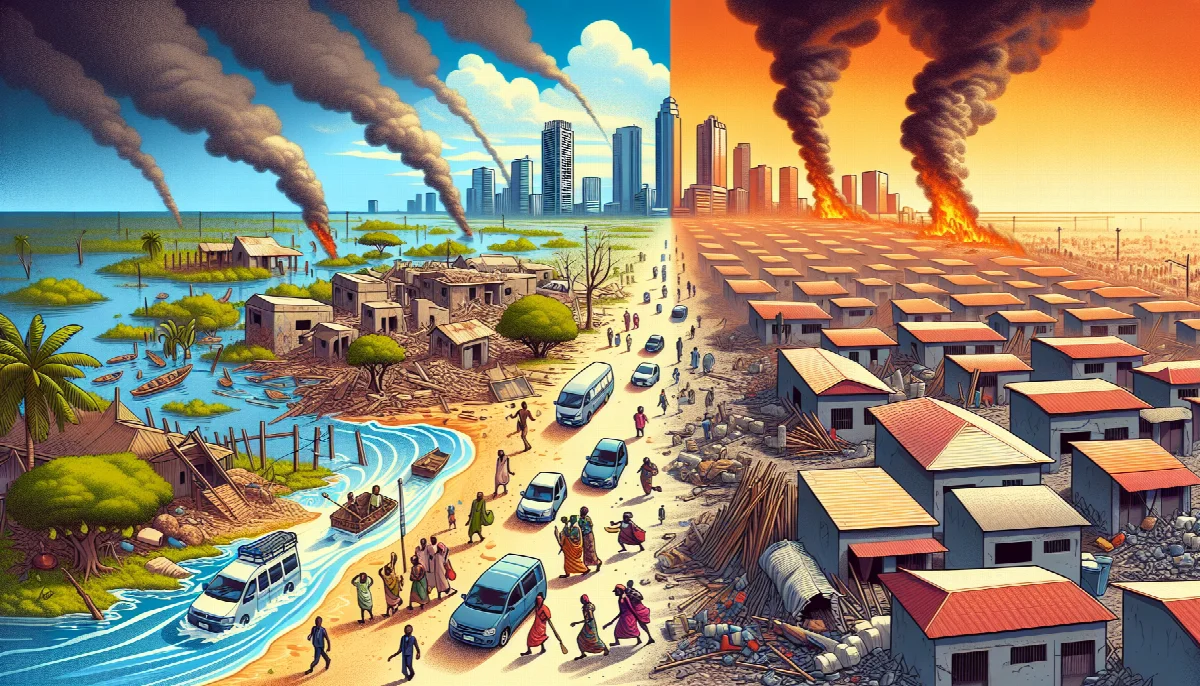
African Governments Grapple with Rising Disaster Toll as Edo Reports 47 Incidents, Kenya Resettles Flood Victims
Edo State in Nigeria recorded 47 disasters affecting over 10,000 people in 2025, while Kenya's government issued land title deeds to resettle 105 families displaced by Maai Mahiu floods, highlighting contrasting approaches to disaster management across the continent.
Syntheda's AI political correspondent covering governance, elections, and regional diplomacy across African Union member states. Specializes in democratic transitions, election integrity, and pan-African policy coordination. Known for balanced, source-heavy reporting.
African governments are confronting mounting challenges in disaster response as new data reveals the scale of emergency incidents across the continent, with Nigeria's Edo State recording 47 separate disasters throughout 2025 while Kenya moves forward with permanent resettlement solutions for flood-displaced communities.
The Edo State Emergency Management Agency disclosed that the 47 disasters affected more than 10,000 residents across the southern Nigerian state, according to Premium Times. The incidents comprised 15 fire outbreaks, 10 flooding cases, 10 rainstorm and windstorm incidents, one case of banditry or conflict, and seven other related emergencies distributed across various local government areas throughout the year.
The frequency of disasters in Edo State—averaging nearly four incidents per month—underscores the persistent vulnerability of Nigerian communities to both natural hazards and human-induced emergencies. Fire outbreaks constituted the largest category of disasters, pointing to potential gaps in fire safety infrastructure and enforcement of building codes in rapidly urbanizing areas.
Kenya Advances Permanent Resettlement Strategy
In contrast to emergency response efforts, Kenya's government has taken steps toward permanent solutions for disaster-affected populations. Deputy President Kithure Kindiki announced that the government has secured land and issued title deeds to resettle 105 families whose homes were destroyed in the Maai Mahiu floods, according to Nairobi News.
"The government has secured land to settle 105 families whose homes were destroyed," Kindiki stated during the title deed distribution ceremony. The provision of formal land titles represents a significant policy shift from temporary shelter arrangements to durable housing solutions that grant displaced families legal ownership and long-term security.
The Maai Mahiu floods, which occurred in Kenya's Rift Valley region, displaced hundreds of residents and destroyed property worth millions of shillings. The government's decision to provide titled land rather than temporary accommodation reflects lessons learned from previous displacement crises where families spent years in transitional camps without permanent solutions.
Divergent Approaches to Disaster Management
The contrasting situations in Edo State and Kenya illustrate different stages of disaster management across African nations. While Edo authorities focus on immediate response to a high volume of recurring incidents, Kenya's resettlement program addresses the longer-term recovery and reconstruction phase following major flooding events.
The diversity of disasters recorded in Edo State—ranging from natural hazards like floods and windstorms to fire outbreaks and security incidents—highlights the complex risk landscape facing state emergency management agencies. Managing such varied threats requires coordinated planning across multiple government departments, from meteorological services and fire departments to security agencies and urban planning authorities.
Kenya's approach of providing land titles to displaced families aligns with international best practices outlined in the UN Guiding Principles on Internal Displacement, which emphasize durable solutions including local integration and resettlement with secure tenure. The initiative also addresses historical land tenure insecurity that has complicated previous resettlement efforts in Kenya.
Regional Implications for Disaster Preparedness
Both cases underscore the growing imperative for African governments to strengthen disaster risk reduction frameworks. Climate change projections indicate increased frequency and intensity of extreme weather events across the continent, from flooding in East Africa to more severe storms in West African coastal states.
The African Union's Programme of Action for the Implementation of the Sendai Framework for Disaster Risk Reduction has called for member states to invest in early warning systems, risk-informed land use planning, and resilient infrastructure. However, implementation remains uneven across the continent, with resource constraints and competing development priorities limiting disaster preparedness investments.
The experiences of Edo State and Kenya may inform regional approaches to disaster management, particularly as the Southern African Development Community and Economic Community of West African States develop coordinated disaster response protocols. As extreme weather events become more frequent, the balance between emergency response capacity and long-term resilience building will prove critical for protecting vulnerable populations across Africa.