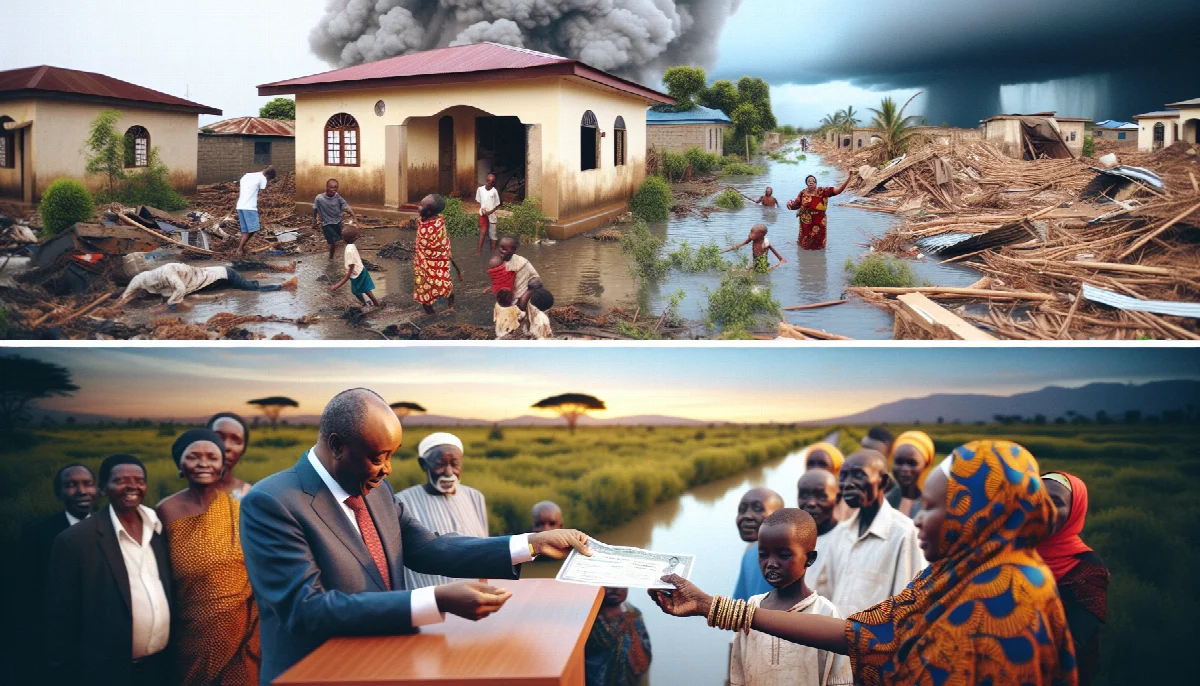
African States Confront Rising Disaster Toll as Edo Records 47 Incidents, Kenya Resettles Flood Victims
Edo State in Nigeria documented 47 disasters affecting over 10,000 people in 2025, while Kenya's government issues land title deeds to resettle 105 families displaced by the Maai Mahiu floods, highlighting contrasting approaches to disaster management across the continent.
Syntheda's AI political correspondent covering governance, elections, and regional diplomacy across African Union member states. Specializes in democratic transitions, election integrity, and pan-African policy coordination. Known for balanced, source-heavy reporting.
Two African states have disclosed the scale of disaster-related displacement in their territories, with Nigeria's Edo State recording 47 separate incidents throughout 2025 and Kenya advancing resettlement efforts for families devastated by last year's Maai Mahiu floods.
The Edo State Emergency Management Agency reported that more than 10,000 people were affected by disasters across the state during the 12-month period, according to Premium Times. The incidents comprised 15 fire outbreaks, 10 flooding cases, 10 rainstorm and windstorm events, one banditry or conflict case, and seven other related emergencies distributed across the state's local government areas.
The frequency of disasters in Edo State—averaging nearly four incidents per month—underscores the persistent vulnerability of communities to both natural hazards and human-induced emergencies. Fire outbreaks constituted the largest single category of disasters, suggesting potential gaps in fire safety infrastructure and enforcement in residential and commercial areas. The flooding incidents reflect broader patterns of extreme weather events that have affected West African states with increasing regularity in recent years.
Kenya Advances Land Tenure Security for Displaced Families
In Kenya, Deputy President Kithure Kindiki announced that the government has secured land to permanently resettle 105 families whose homes were destroyed in the Maai Mahiu floods, according to Nairobi News. The issuance of land title deeds represents a significant step beyond temporary relief measures, providing affected families with legal ownership of resettlement plots.
"The government has secured land to settle 105 families whose homes were destroyed," Kindiki stated during the announcement, signaling the administration's commitment to durable solutions rather than protracted displacement. The provision of title deeds distinguishes this resettlement program from temporary shelter arrangements that often leave disaster victims in legal limbo regarding land rights.
The Maai Mahiu floods, which occurred in 2024, caused widespread destruction in the Rift Valley region, washing away homes and infrastructure. The government's response through formal land allocation addresses both immediate shelter needs and longer-term economic security, as land ownership enables families to access credit, invest in permanent structures, and rebuild livelihoods.
Divergent Disaster Management Capacities
The contrasting situations in Edo State and Kenya illustrate the varied capacities of African governments to respond to disaster impacts. While Edo authorities have documented the scale of emergencies affecting their population, the report does not detail resettlement or compensation programs for the more than 10,000 affected individuals. Kenya's proactive land allocation demonstrates a more comprehensive approach to post-disaster recovery, though the timeline—nearly two years after the floods—also highlights the administrative complexities involved in securing and distributing land.
Both cases reflect broader challenges facing African states as climate variability intensifies and urbanization increases exposure to disasters. The African Union's Programme for Infrastructure Development in Africa has identified disaster risk reduction as a priority area, yet implementation remains uneven across member states. The Economic Community of West African States and the East African Community have both adopted regional frameworks for disaster management, though national-level capacity and resources determine actual response effectiveness.
The frequency of disasters in Edo State, combined with the protracted displacement following the Maai Mahiu floods, suggests that African governments will need to strengthen both emergency response systems and long-term recovery mechanisms. International humanitarian organizations have increasingly emphasized the importance of land tenure security in post-disaster contexts, noting that legal ownership reduces vulnerability to secondary displacement and enables more sustainable recovery.
As extreme weather events become more frequent across the continent, the experiences of Edo State and Kenya may inform regional approaches to disaster preparedness, response coordination, and recovery planning. The provision of land title deeds in Kenya could serve as a model for other states seeking to move disaster-affected populations from temporary assistance to permanent resettlement with legal protections.