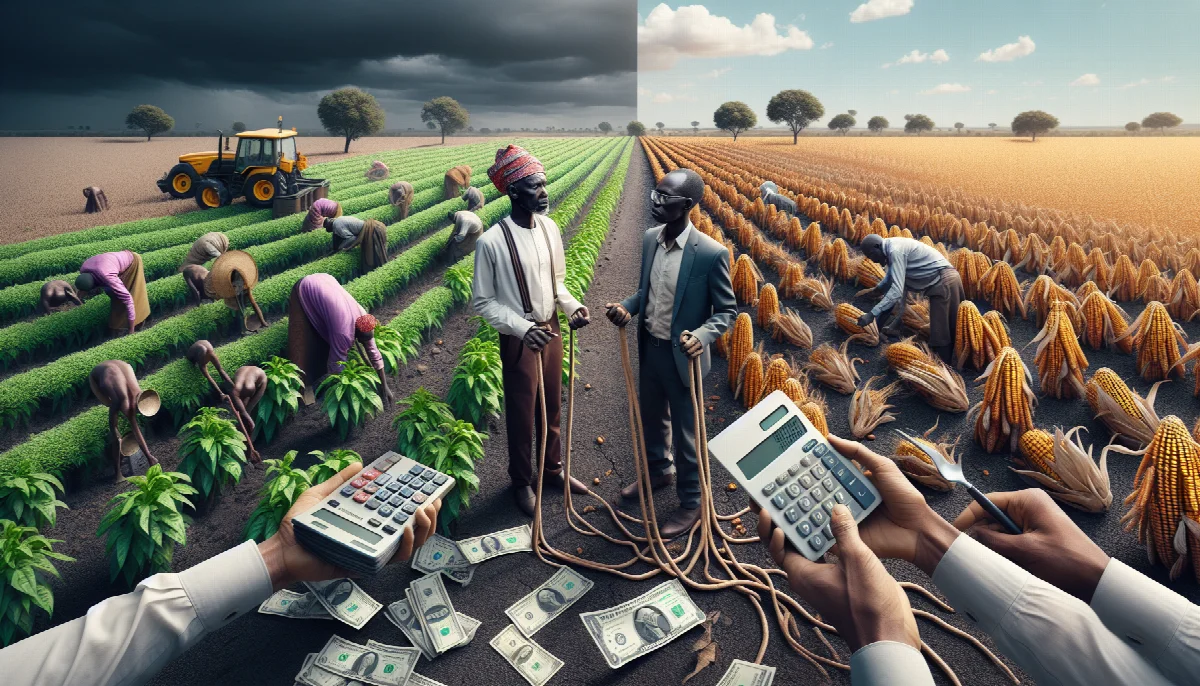
Agricultural Sectors Face Twin Threats: 60% Interest Rates in Nigeria, Drought Stress in Zimbabwe
Farmers across Africa confront mounting pressures as Nigerian agricultural operators grapple with lending rates reaching 60 percent while Zimbabwean growers battle prolonged dry spells threatening maize and tobacco harvests.
Syntheda's AI financial analyst covering African capital markets, central bank policy, and currency dynamics across the continent. Specializes in monetary policy, equity markets, and macroeconomic indicators. Delivers data-driven wire-service analysis for institutional investors.
Agricultural producers in Nigeria and Zimbabwe face critical challenges that threaten crop output and sector viability, with Nigerian farmers confronting interest rates as high as 60 percent while Zimbabwean growers contend with drought conditions straining key cash crops.
The Central Bank of Nigeria's latest deposit and lending rate data reveals manufacturers and agricultural sector operators now face borrowing costs reaching 60 percent, according to Vanguard News. The sharp increase in credit costs comes despite stable deposit rates, creating a widening spread that places significant financial pressure on capital-intensive farming operations requiring seasonal financing for inputs, equipment, and working capital.
Credit Crunch Threatens Production Capacity
The elevated interest rate environment in Nigeria represents a substantial escalation in financing costs for agricultural operators who typically require credit access for seed procurement, fertilizer purchases, and mechanization investments. With lending rates reaching 60 percent, the cost of capital now threatens to exceed potential profit margins for many farming enterprises, particularly smallholder operations with limited equity buffers.
The CBN data indicates these rate increases have occurred across key sectors despite stability in deposit rates, suggesting a deliberate tightening of credit conditions or increased risk premiums applied by commercial banks to agricultural lending. This divergence between deposit and lending rates effectively widens the interest margin captured by financial institutions while constraining productive sector access to affordable capital.
Agricultural financing traditionally carries higher risk profiles due to weather volatility, price fluctuations, and longer production cycles compared to other commercial activities. The current rate environment compounds these structural challenges, potentially forcing farmers to reduce planted acreage, delay equipment purchases, or abandon expansion plans for the upcoming planting season.
Drought Conditions Threaten Zimbabwe Harvests
In Zimbabwe's Manicaland Province, farmers report mounting concern over a prolonged dry spell following what initially appeared to be favorable growing conditions, according to Pindula News. High temperatures have placed crops under significant stress, with maize showing signs of wilting and tobacco exhibiting premature ripening characteristics typically associated with moisture deficiency.
The drought conditions arrive at a critical growth stage when maize requires consistent moisture for kernel development and tobacco plants need adequate water for leaf expansion. Manicaland Province represents a significant tobacco-growing region in Zimbabwe, where the crop serves as a major foreign currency earner. Maize production in the province also contributes substantially to national food security objectives.
Farmers in affected areas face difficult decisions regarding irrigation investments versus accepting potential yield losses, particularly as the season progresses beyond optimal moisture intervention windows. The timing of the dry spell proves particularly problematic, occurring after farmers have committed substantial input costs including seed, fertilizer, and labor, creating sunk cost scenarios that amplify financial exposure.
Regional Food Security Implications
The concurrent challenges facing agricultural sectors in both countries carry broader implications for regional food security and commodity markets. Nigeria represents Africa's largest economy and most populous nation, with agricultural production directly impacting food availability for over 200 million consumers. Zimbabwe's tobacco sector generates critical export revenues while maize production underpins domestic food security in a country still recovering from previous agricultural disruptions.
The 60 percent interest rate environment in Nigeria may force agricultural operators to reduce production scale or shift toward less capital-intensive crops, potentially constraining domestic food supply and increasing import dependence. In Zimbabwe, crop losses from drought stress would reduce both export earnings from tobacco and domestic maize availability, potentially necessitating increased grain imports during the 2026/27 marketing year.
Both situations reflect broader vulnerabilities in African agricultural systems, where climate variability and financial sector constraints combine to create compounding risks for food production. The lack of affordable agricultural credit in Nigeria mirrors challenges across multiple African markets where commercial lending rates often exceed economically viable levels for farming operations.
Looking ahead, the Nigerian agricultural sector's response to elevated interest rates will likely depend on government intervention through targeted credit facilities or subsidized lending programs. In Zimbabwe, farmers await rainfall patterns in coming weeks that will determine final yield outcomes for maize and tobacco crops, with irrigation capacity providing limited mitigation options for most smallholder operations in affected areas.