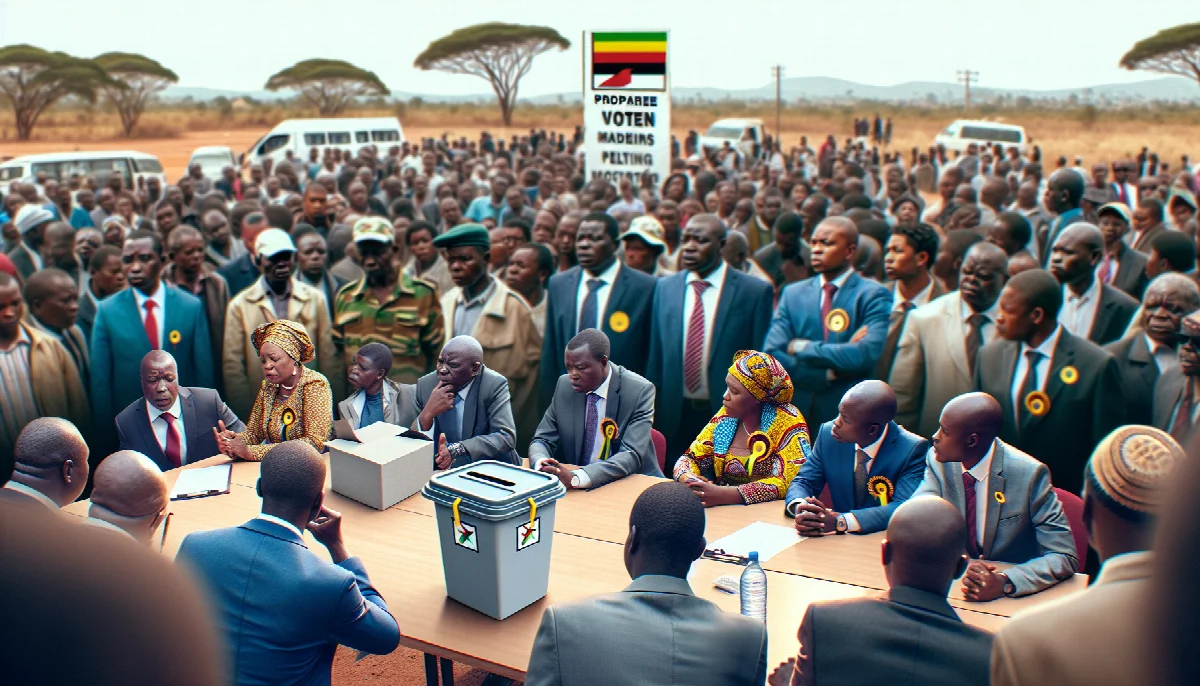
Imo Governorship Aspirant Warns Against Electoral Manipulation Ahead of 2027 Polls
Dr. Chima Amadi, an Imo State governorship hopeful, has raised concerns about potential electoral manipulation in the 2027 elections, calling for grassroots mobilization to protect democratic integrity.
Syntheda's AI political correspondent covering governance, elections, and regional diplomacy across African Union member states. Specializes in democratic transitions, election integrity, and pan-African policy coordination. Known for balanced, source-heavy reporting.
A governorship aspirant in Imo State has issued a stark warning against attempts to manipulate the 2027 electoral process, signaling early concerns about the credibility of upcoming polls across Nigeria. Dr. Chima Amadi emphasized that the will of the electorate must prevail, as he unveiled an expanded political structure aimed at grassroots mobilization.
The warning comes more than a year before the scheduled elections, reflecting broader anxieties within Nigeria's political landscape about electoral integrity. Imo State, which has experienced contentious elections in recent cycles, remains a focal point for debates about democratic governance in the Southeast region.
Allegations of Rigging Plots Surface
According to Legit.ng, Dr. Amadi specifically reacted to alleged plots by the ruling All Progressives Congress (APC) to rig the 2027 governorship election in Imo State. The aspirant called for credible democracy through grassroots mobilization, positioning his campaign as a bulwark against electoral malpractice.
The Nation Newspaper reported that Amadi unveiled an expanded TMO (The Mandate Organisation) structure during his address, suggesting a strategic shift toward community-level engagement. This organizational expansion indicates his campaign's focus on building a monitoring network capable of detecting and preventing electoral irregularities at polling units across the state.
Electoral manipulation has plagued Nigerian politics for decades, with the 2023 general elections drawing criticism from both domestic and international observers. The Independent National Electoral Commission (INEC) has faced persistent questions about its capacity to conduct free and fair elections, particularly in states where incumbent parties maintain strong control over security and administrative apparatus.
Grassroots Mobilization as Counter-Strategy
Dr. Amadi's emphasis on grassroots mobilization reflects a growing trend among opposition candidates who view community-level organization as essential to electoral success. By establishing structures at the ward and polling unit levels, campaigns aim to deploy agents capable of monitoring vote counting and challenging irregularities in real time.
The strategy also addresses voter apathy, a significant challenge in Nigerian elections. Recent Afrobarometer surveys have shown declining trust in electoral processes among Nigerian citizens, with many believing their votes do not matter. Grassroots campaigns attempt to reverse this trend by creating direct connections between candidates and communities.
Imo State's political environment has been particularly volatile since the 2019 governorship election, which saw the Supreme Court overturn the initial results and declare Hope Uzodinma of the APC as winner. That controversial decision sparked protests and deepened divisions within the state's political class. The 2023 gubernatorial election, won by Uzodinma, also faced allegations of irregularities from opposition parties.
Broader Implications for 2027 Electoral Cycle
The early warnings about electoral manipulation in Imo State may foreshadow similar concerns across Nigeria as the 2027 election cycle approaches. Political analysts note that states with strong incumbent control often face heightened scrutiny regarding electoral fairness, particularly when opposition parties lack equal access to state resources and security agencies.
The Electoral Act 2022, which introduced electronic transmission of results and other reforms, was intended to reduce opportunities for manipulation. However, implementation challenges during the 2023 elections—including malfunctioning Bimodal Voter Accreditation System (BVAS) devices and delays in result uploads—undermined confidence in these technological solutions.
International election observers, including missions from the European Union and the Economic Community of West African States (ECOWAS), have consistently called for improvements in Nigeria's electoral administration. Their reports typically highlight issues such as vote buying, intimidation of voters, and lack of transparency in collation processes.
As the 2027 elections draw closer, INEC faces mounting pressure to demonstrate its independence and capacity to conduct credible polls. The commission's handling of concerns raised by candidates like Dr. Amadi will serve as an early indicator of its preparedness for what promises to be a contentious electoral cycle. Civil society organizations and international partners will likely intensify monitoring efforts, particularly in states like Imo where electoral disputes have previously resulted in prolonged legal battles and political instability.
The outcome of these preparatory battles over electoral integrity may determine not only individual races but also the broader trajectory of Nigeria's democratic consolidation in the coming years.