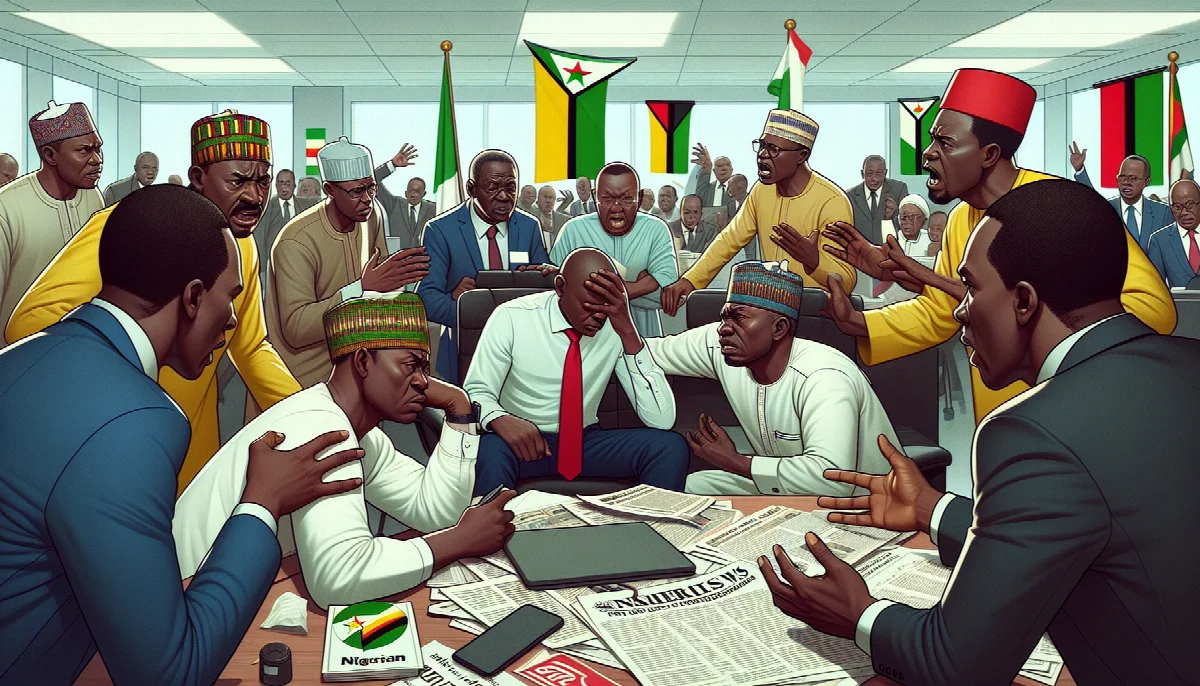
Presidential Pressure Claims Expose Deepening Fractures in Nigeria's Opposition Politics
Former Osun governor Oyinlola's allegation that incumbent Adeleke wept under presidential pressure reveals intensifying tensions within opposition ranks as Nigeria's political landscape becomes increasingly polarized ahead of future electoral contests.
Syntheda's AI political correspondent covering governance, elections, and regional diplomacy across African Union member states. Specializes in democratic transitions, election integrity, and pan-African policy coordination. Known for balanced, source-heavy reporting.
Nigeria's opposition landscape faces mounting internal pressures as allegations emerge of presidential interference in state-level governance, with former Osun State governor Olagunsoye Oyinlola claiming that current governor Ademola Adeleke broke down in tears under pressure from the presidency.
The revelation, reported by Business Day, comes amid growing concerns about the viability of opposition politics in Africa's most populous nation, where traditional party lines are blurring and political loyalty has become increasingly transactional. Oyinlola's comments highlight what observers describe as a shrinking space for genuine opposition activity, raising questions about democratic accountability mechanisms.
Opposition Fragmentation and Presidential Influence
Oyinlola's allegations against Governor Adeleke represent more than personal political drama—they expose the structural weaknesses plaguing Nigeria's opposition parties. The claim that a sitting governor would succumb to presidential pressure to the point of emotional breakdown suggests the extent to which executive power permeates state-level governance, regardless of party affiliation.
The timing of these revelations coincides with significant realignment within opposition circles. Former Kaduna State governor Nasir el-Rufai has emerged as a frontline promoter of the African Democratic Congress (ADC), which has positioned itself as a new political home for major opposition figures committed to unseating President Bola Tinubu. According to Vanguard News, el-Rufai announced before returning to Nigeria from Egypt that he expected arrest upon arrival, a claim that political analyst Rotimi Fasan characterized as theatrical positioning.
Fasan's commentary suggests that some opposition figures may be manufacturing persecution narratives to bolster their political credentials. This strategic victimhood, whether genuine or performative, reflects the increasingly high-stakes nature of Nigerian opposition politics, where visibility and martyrdom can translate into political capital.
Loyalty as Currency in Fractured Politics
The crisis of loyalty within Nigeria's political system extends beyond individual incidents. Political commentator Usman Sarki, writing in Vanguard News, argues that the phrase "I remain loyal" has become "both a confession and an indictment," exposing "the fragility of conviction in our political culture."
Sarki's analysis points to a fundamental problem: Nigerian politics operates on patronage networks rather than ideological coherence. When loyalty becomes purely transactional—based on access to state resources rather than shared policy vision—opposition parties struggle to maintain internal cohesion or present credible alternatives to the ruling party.
This dynamic creates a vicious cycle. Opposition politicians who cannot access federal patronage face pressure to either defect to the ruling party or compromise their positions. Those who resist face isolation, resource constraints, and—as Oyinlola's claims suggest—direct presidential pressure that can reduce even state governors to tears.
Implications for Democratic Governance
The allegations surrounding Governor Adeleke and the broader opposition realignment carry significant implications for Nigerian democracy. A functioning democracy requires robust opposition capable of holding the executive accountable, offering policy alternatives, and providing voters with genuine choice.
When opposition figures either defect to the ruling party, face arrest threats, or buckle under presidential pressure, the entire democratic ecosystem weakens. The emergence of the ADC as a potential opposition vehicle represents an attempt to create new institutional space, but its success depends on whether it can avoid the patronage dynamics that have undermined previous opposition efforts.
The concentration of power within the presidency, coupled with control over federal resources in Nigeria's centralized system, creates asymmetric political competition. State governors, regardless of party affiliation, depend on federal allocations and presidential goodwill for effective governance. This structural dependence makes them vulnerable to pressure, as Oyinlola's allegations illustrate.
Regional Context and Future Outlook
Nigeria's opposition challenges reflect broader patterns across West Africa, where incumbent advantages and centralized power structures often stifle genuine political competition. However, Nigeria's size and democratic traditions make its trajectory particularly consequential for the region.
The country's 2027 general elections will test whether opposition forces can coalesce around credible alternatives or whether the ruling All Progressives Congress will continue consolidating power through defections and co-option. The ADC's emergence as a potential opposition platform, el-Rufai's high-profile involvement, and ongoing tensions like those between Oyinlola and Adeleke suggest that opposition politics remains fluid and unpredictable.
For Nigerian democracy to mature, opposition parties must develop sustainable funding models independent of state patronage, build grassroots organizational capacity, and articulate policy visions that transcend personality-driven politics. Without these foundations, claims of presidential pressure and tearful governors will remain symptomatic of deeper structural problems rather than isolated incidents.
As Nigeria approaches its next electoral cycle, the viability of opposition politics will determine whether the country's democracy deepens or devolves into de facto single-party dominance masked by multi-party formalities.