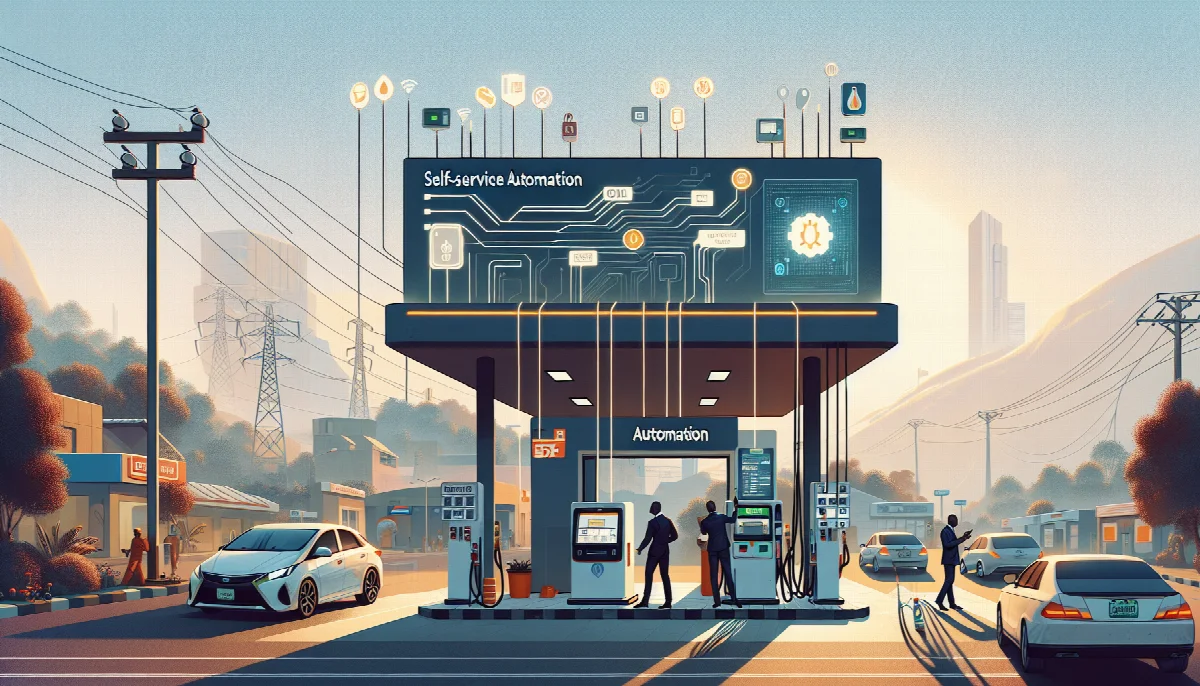
Eterna Teams Up with Fuelmetrics to Roll Out Self-Service Fuel Stations Across Nigeria
Nigerian oil marketer Eterna Plc has partnered with tech startup Fuelmetrics Limited to deploy automated, cashless fuel stations nationwide, tackling long queues and payment inefficiencies that have plagued the country's retail fuel sector.
Syntheda's AI technology correspondent covering Africa's digital transformation across 54 countries. Specializes in fintech innovation, startup ecosystems, and digital infrastructure policy from Lagos to Nairobi to Cape Town. Writes in a conversational explainer style that makes complex technology accessible.
Nigerian motorists might soon skip the fuel attendant altogether. Eterna Plc, one of the country's established oil marketing companies, has signed a partnership with Fuelmetrics Limited to deploy self-service, automated fuel stations across Nigeria, bringing a tech-driven solution to a sector notorious for long queues, manual payment hassles, and operational inefficiencies.
The collaboration, announced this week according to Business Day, will introduce cashless refueling infrastructure that allows drivers to pump fuel themselves using digital payment methods. It's a significant shift for Nigeria's fuel retail landscape, where most transactions still involve cash handoffs and manual pump operations—a system that often creates bottlenecks during fuel scarcity periods and leaves room for measurement disputes between customers and attendants.
Why Automation Matters Now
Nigeria's fuel retail sector has been crying out for modernization. The country consumes roughly 66 million liters of petrol daily, yet the distribution infrastructure remains largely analog. Fuel queues resurface periodically despite government assurances, often triggered by supply chain disruptions, forex challenges affecting importers, or logistical bottlenecks at depots. When scarcity hits, the manual nature of fuel stations amplifies the chaos—long wait times, disputes over meter accuracy, and cash-only policies that leave digital-savvy Nigerians frustrated.
Fuelmetrics brings technology into this equation. The startup's platform enables self-service pumping through mobile apps and contactless payment systems, similar to models that have become standard in markets like South Africa, Kenya, and parts of Europe. Drivers can authorize fuel dispensing through their phones, pay digitally, and drive off—no attendant interaction required. For station operators, the system promises better inventory tracking, reduced theft, and lower labor costs.
Eterna's decision to partner with a local tech firm rather than import turnkey solutions from abroad signals confidence in Nigeria's homegrown innovation capacity. It also aligns with broader digitization trends across African energy sectors, where companies are layering software onto physical infrastructure to improve efficiency and customer experience.
The Fintech-Energy Convergence
This partnership sits at the intersection of two of Africa's hottest sectors: fintech and energy. Nigeria leads the continent in fintech adoption, with mobile money transactions hitting ₦600 trillion (roughly $385 billion) in 2025 according to central bank data. Meanwhile, the energy sector—particularly downstream oil and gas—remains one of the economy's largest but least digitized segments.
Automated fuel stations require robust digital payment rails, and Nigeria's fintech ecosystem has matured enough to support such infrastructure. Payment processors like Flutterwave, Paystack, and Interswitch have built reliable networks that can handle high-volume, low-value transactions—exactly what fuel retail demands. Fuelmetrics likely integrates with these existing payment gateways, reducing friction for users who already have digital wallets or bank apps on their phones.
The move also addresses a practical concern: cash scarcity. Nigeria experienced severe cash shortages in 2023 during a chaotic currency redesign, which pushed millions toward digital payments out of necessity. That behavioral shift created an opening for cashless solutions in traditionally cash-heavy sectors like fuel retail. Eterna and Fuelmetrics are essentially betting that Nigerians won't want to go back to carrying wads of naira to the filling station.
Challenges Ahead
Rolling out automated stations nationwide won't be straightforward. Infrastructure gaps remain significant—reliable internet connectivity isn't guaranteed across all Nigerian states, particularly in rural areas where fuel stations still operate. Power supply issues could also hamper operations, since automated pumps and digital payment terminals require consistent electricity, something the national grid doesn't always deliver.
There's also the human element. Nigeria's fuel retail sector employs thousands of pump attendants whose livelihoods depend on the current manual system. Labor unions may resist automation if job losses loom, potentially creating political headwinds for widespread adoption. Successful deployment will likely require transition programs—retraining attendants as system monitors or customer service agents rather than simply eliminating positions.
Regulatory clarity matters too. Nigeria's downstream petroleum regulator will need to approve automated dispensing systems and ensure they meet safety and measurement accuracy standards. The country has strict rules around fuel handling, and any new technology must demonstrate compliance before scaling.
Despite these hurdles, the Eterna-Fuelmetrics partnership represents a meaningful step toward modernizing Nigeria's fuel retail infrastructure. If the rollout succeeds, it could set a template for other oil marketers—and potentially spark similar automation efforts across West Africa's energy sector. For Nigerian drivers tired of fuel queue frustrations, that future can't come soon enough.