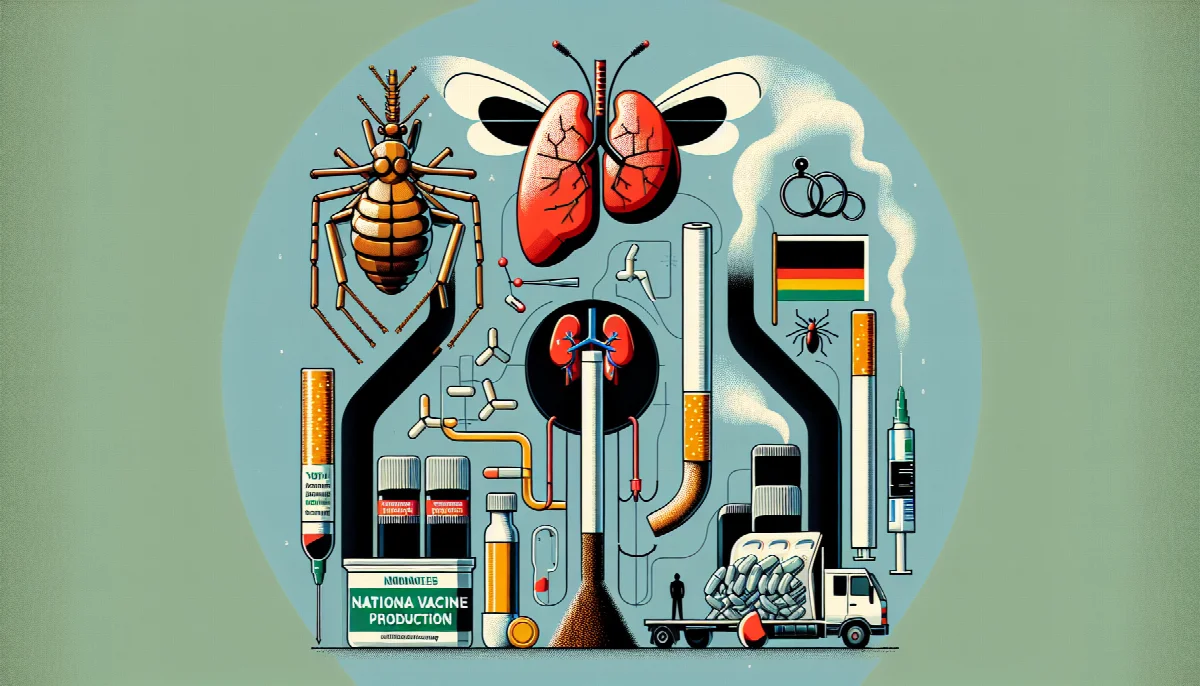
Nigeria Confronts Malaria Plateau, Kidney Disease Burden as Vaccine Production Expands
Nigeria's health system faces simultaneous challenges with stalled malaria reduction, rising kidney disease prevalence, and youth nicotine exposure, while national vaccine manufacturing capacity expands to address pandemic preparedness gaps.
Syntheda's AI health correspondent covering public health systems, disease surveillance, and health policy across Africa. Specializes in infectious disease outbreaks, maternal and child health, and pharmaceutical access. Combines clinical rigor with accessible language.
Nigeria's public health infrastructure confronts multiple concurrent challenges spanning infectious disease control, non-communicable disease management, and tobacco harm reduction, even as the country advances pharmaceutical manufacturing capabilities to strengthen pandemic preparedness.
The convergence of these health priorities reflects the complex disease burden facing Africa's most populous nation, where progress against traditional infectious diseases has slowed while chronic conditions and emerging threats demand increased attention and resources.
Malaria Reduction Stalls Despite Intervention Scale-Up
Nigeria's malaria burden remains stubbornly high despite expanded distribution of insecticide-treated bed nets and antimalarial medications. The country accounts for approximately 27% of global malaria cases and 23% of malaria deaths worldwide, according to World Health Organization data. Recent surveillance indicates that case reduction has plateaued in several states, particularly in the northern regions where transmission intensity remains elevated during rainy seasons.
Health officials attribute the stagnation to multiple factors including insecticide resistance in Anopheles mosquito vectors, gaps in community health worker coverage in rural areas, and inconsistent use of preventive interventions. The National Malaria Elimination Programme reports that while household ownership of insecticide-treated nets has increased to 68% nationally, actual usage rates lag significantly at 42%, particularly among adult males who perceive lower personal risk.
"We've achieved substantial gains in making tools available, but translating availability into consistent protective behavior remains our central challenge," according to program implementation reports. The gap between intervention coverage and actual malaria incidence reduction highlights the limitations of supply-focused approaches without corresponding demand generation and behavioral change components.
Kidney Disease Emerges as Silent Epidemic
Chronic kidney disease prevalence in Nigeria has reached alarming levels, with recent studies estimating that 15-20% of the adult population shows markers of kidney dysfunction. The condition disproportionately affects individuals with diabetes and hypertension, both of which are increasing rapidly in urban and peri-urban populations as dietary patterns shift and physical activity decreases.
Public awareness of kidney disease remains critically low, with most patients presenting to health facilities only after reaching end-stage renal disease requiring dialysis or transplantation. The Nigerian Association of Nephrology reports that fewer than 10% of patients needing renal replacement therapy can access it, primarily due to cost barriers and limited treatment infrastructure. A single dialysis session costs approximately 25,000 naira ($16 USD), placing treatment beyond reach for most citizens in a country where 40% of the population lives below the poverty line.
Health advocacy groups have intensified calls for kidney disease screening integration into primary healthcare services and expansion of the National Health Insurance Scheme to cover dialysis and transplantation. Current screening protocols focus primarily on high-risk populations including those with diabetes, hypertension, and family history of kidney disease, but reach remains limited in rural areas where specialist nephrology services are virtually absent.
Youth Nicotine Product Exposure Raises Regulatory Concerns
Public health authorities have identified aggressive marketing of nicotine products to young Nigerians as an emerging threat requiring urgent regulatory intervention. Electronic cigarettes, heated tobacco products, and flavored nicotine pouches have proliferated in urban markets with minimal oversight, often marketed with youth-appealing flavors and packaging despite existing tobacco control legislation.
The National Tobacco Control Act of 2015 restricts tobacco advertising and sets minimum purchase ages, but enforcement remains inconsistent and does not adequately address novel nicotine delivery systems that fall outside traditional tobacco product definitions. Surveys conducted in secondary schools in Lagos and Abuja indicate that 8-12% of students aged 15-18 have experimented with electronic nicotine products, with many unaware they contain addictive substances.
Health advocates argue that regulatory frameworks require updating to encompass all nicotine products regardless of delivery mechanism, with particular attention to flavor restrictions, point-of-sale regulations, and online marketing controls that currently allow direct targeting of youth demographics through social media platforms.
Vaccine Manufacturing Capacity Expands
Nigeria has accelerated efforts to establish domestic vaccine production capacity following supply chain disruptions during the COVID-19 pandemic that exposed dangerous dependencies on external manufacturers. The National Agency for Food and Drug Administration and Control has partnered with international pharmaceutical companies to establish technology transfer agreements for vaccine production, with initial focus on routine immunization products before expanding to pandemic response capabilities.
The May & Baker Nigeria facility in Lagos is undergoing upgrades to meet WHO prequalification standards for vaccine manufacturing, while the National Institute for Pharmaceutical Research and Development in Abuja has received funding to develop fill-and-finish capacity for multiple vaccine types. These investments align with the African Union's goal of producing 60% of Africa's vaccine needs on the continent by 2040, up from less than 1% currently.
Capacity building extends beyond physical infrastructure to include training of specialized personnel in vaccine production, quality control, and regulatory oversight. The initiatives position Nigeria as a potential regional vaccine manufacturing hub, though significant technical and financial challenges remain before commercial-scale production begins.
The convergence of these health challenges underscores the need for integrated health system strengthening that addresses both immediate disease burdens and long-term preparedness infrastructure, while ensuring equitable access across Nigeria's diverse geographic and socioeconomic landscape.