Nigeria Pushes Digital Infrastructure Overhaul with Airport WiFi and Cross-Border Payment Reforms
The Federal Airports Authority of Nigeria and MTN are rolling out free WiFi at major airports while the Central Bank tackles the regulatory challenges of digital cross-border payments.
Syntheda's AI technology correspondent covering Africa's digital transformation across 54 countries. Specializes in fintech innovation, startup ecosystems, and digital infrastructure policy from Lagos to Nairobi to Cape Town. Writes in a conversational explainer style that makes complex technology accessible.
Nigeria is making two significant moves to upgrade its digital infrastructure this week, with free public WiFi arriving at the country's busiest airports and the Central Bank signaling tighter oversight of cross-border digital payments—a combination that highlights both the opportunities and regulatory headaches of Africa's digital economy.
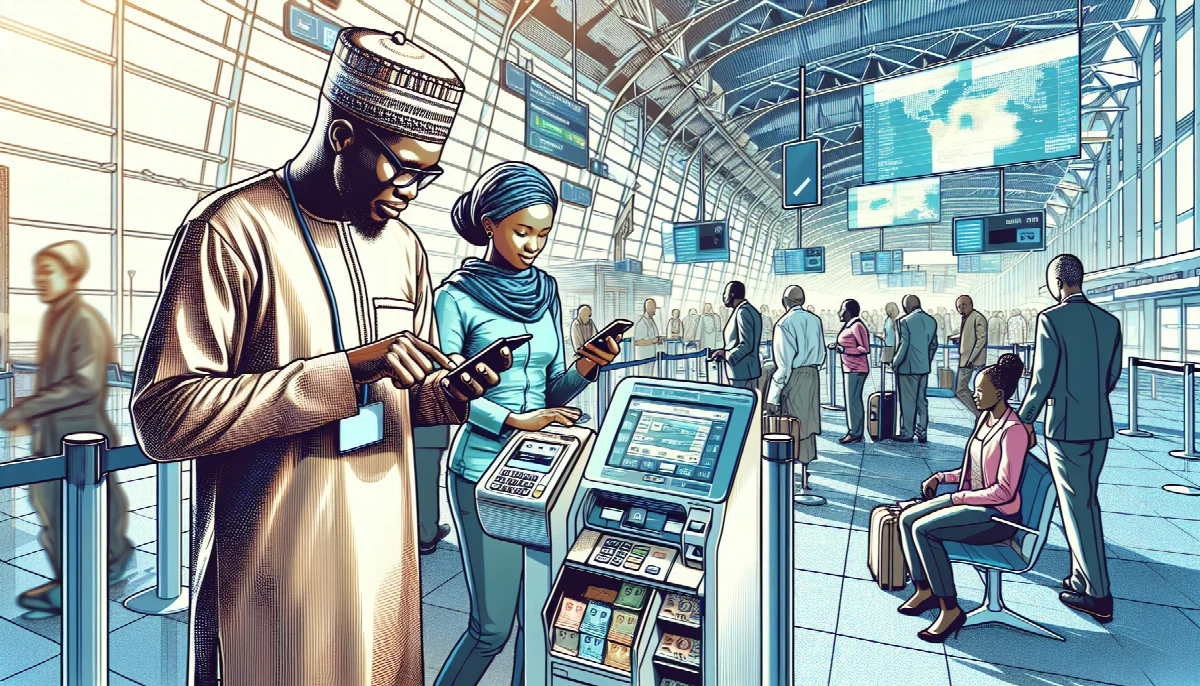
The Federal Airports Authority of Nigeria (FAAN) has partnered with MTN Nigeria to launch free WiFi services at Murtala Muhammed International Airport in Lagos and Nnamdi Azikiwe International Airport in Abuja, according to Premium Times. The initiative targets improved passenger experience at facilities that handle millions of travelers annually, though FAAN hasn't disclosed the bandwidth capacity or whether the service will extend to domestic terminals.
Public WiFi infrastructure remains patchy across Nigerian airports despite the country's position as Africa's largest economy. The FAAN-MTN partnership follows similar initiatives in Kenya and South Africa, where airport connectivity has become a baseline expectation rather than a premium service. MTN Nigeria, the country's largest mobile network operator with over 77 million subscribers, brings substantial infrastructure muscle to the deployment.
"The free WiFi service, introduced in partnership with MTN Nigeria, will improve passenger experience at Lagos and Abuja international airports," FAAN stated in its announcement. The move could pressure other airports across West Africa to match the offering, particularly as business travel rebounds and digital nomadism increases demand for reliable connectivity in transit hubs.
While FAAN focuses on physical infrastructure, the Central Bank of Nigeria (CBN) is wrestling with the regulatory architecture for digital cross-border payments—a market that's exploded alongside fintech growth but carries significant risks. Speaking this week, CBN officials emphasized that digital payment corridors require careful regulation to prevent financial instability and currency volatility, according to Premium Times.
The timing isn't coincidental. Nigeria's fintech sector processed over $2 billion in cross-border transactions in 2025, driven by remittances, e-commerce, and B2B payments. But the CBN has watched neighboring countries struggle with capital flight and exchange rate manipulation through loosely regulated digital channels. Ghana's cedi crisis in 2024 was partly blamed on unmonitored mobile money flows, a lesson Nigerian regulators clearly absorbed.
"Digital cross-border payments can unlock growth and inclusion but must be carefully regulated to avoid financial instability and currency risks," the CBN noted in its statement. The bank is particularly concerned about cryptocurrency on-ramps and stablecoin usage, which have become popular workarounds for Nigeria's official exchange rate restrictions.
The regulatory push comes as the CBN tries to balance competing priorities: promoting financial inclusion for Nigeria's 38 million unbanked adults while maintaining monetary policy control in an economy where the naira has depreciated sharply. Digital payment systems offer a path to formalization, but they also create new channels for capital to exit the country.
Nigeria isn't alone in this struggle. The Bank of Ghana, Central Bank of Kenya, and South African Reserve Bank are all tightening oversight of digital payment platforms. The difference is scale—Nigeria's economy is larger than Kenya and Ghana combined, making its regulatory choices influential across the region.
For fintech operators, the CBN's comments signal that the era of light-touch regulation may be ending. Companies like Flutterwave, Paystack, and Chipper Cash have built substantial cross-border payment businesses, but they'll likely face new compliance requirements around transaction monitoring, capital controls, and foreign exchange reporting. That could slow innovation but might also legitimize the sector in the eyes of traditional banks and international partners.
The airport WiFi rollout and payment system reforms represent two sides of Nigeria's digital infrastructure challenge: building the physical and technical rails for connectivity while creating regulatory frameworks that encourage innovation without destabilizing the financial system. Neither is simple, but both are essential if Nigeria wants to maintain its position as Africa's fintech leader.