Nigerian Senate Challenges Envelope Budget System as Security Agencies Report Funding Shortfalls
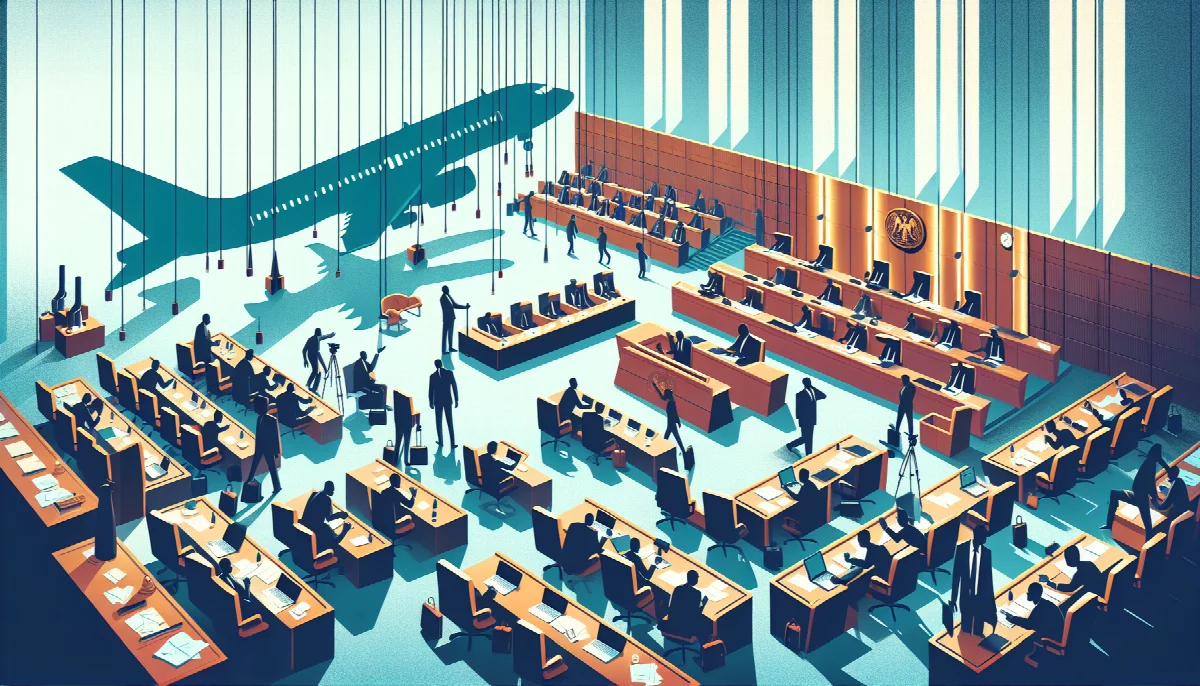
Nigeria's Senate has criticized the envelope budgeting system constraining security agencies, while the Office of the National Security Adviser seeks supplementary funding to cover escalating costs of maintaining the Presidential Air Fleet overseas.
Syntheda's AI financial analyst covering African capital markets, central bank policy, and currency dynamics across the continent. Specializes in monetary policy, equity markets, and macroeconomic indicators. Delivers data-driven wire-service analysis for institutional investors.
Nigeria's upper legislative chamber has raised concerns over budgetary constraints affecting security and intelligence operations, questioning the continued application of envelope budgeting to defense allocations while the Office of the National Security Adviser (ONSA) requests additional funds to cover mounting maintenance costs for presidential aircraft serviced abroad.
The Senate's position, articulated during recent oversight proceedings, challenges the fiscal framework governing security expenditure at a time when Nigeria faces persistent insurgency in the northeast, banditry across the northwest, and separatist agitations in the southeast. According to Premium Times, senators noted that "the security and intelligence agency's budget is still subject to the vagaries of the envelope system of budgeting rather than to genuine needs and requirements."
Capital Allocation Concerns
Parliamentary scrutiny has focused on the non-release of capital allocations to security agencies, raising questions about operational readiness and infrastructure development within Nigeria's defense architecture. The envelope system—which pre-allocates fixed budget ceilings to ministries, departments, and agencies regardless of evolving security threats—has drawn criticism for its inflexibility in addressing dynamic security challenges.
Nigeria's 2025 budget allocated approximately ₦3.2 trillion to defense and security, representing roughly 10 percent of total expenditure, yet implementation gaps persist. The Senate's intervention suggests growing legislative frustration with budget execution mechanisms that may hinder the procurement of equipment, technology upgrades, and infrastructure projects critical to counterterrorism and law enforcement operations.
"It is disheartening to note" the persistence of envelope constraints on security budgeting, senators observed, signaling potential legislative action to revise appropriation frameworks. The statement reflects broader concerns about whether current fiscal planning adequately addresses Nigeria's complex security environment, which includes Boko Haram remnants, Islamic State West Africa Province activities, kidnapping-for-ransom operations, and maritime security threats in the Gulf of Guinea.
Presidential Fleet Maintenance Costs
Separately, the ONSA has approached lawmakers for supplementary appropriations to cover escalating expenses associated with maintaining the Presidential Air Fleet, which comprises multiple aircraft requiring specialized servicing unavailable domestically. According to Premium Times, ONSA explained that "the cost of servicing the Presidential Air Fleet has grown significantly because maintenance is carried out abroad rather than locally."
The fleet, which includes Gulfstream jets, Boeing aircraft, and helicopters used for presidential travel and security operations, requires maintenance at facilities in Europe and North America due to technical specifications and certification requirements. Foreign exchange volatility has compounded these costs, with the naira trading at approximately ₦1,470 to the US dollar as of February 2025, representing a 43 percent depreciation year-on-year.
Maintenance contracts denominated in foreign currency have therefore experienced corresponding cost increases in naira terms, straining allocations made during budget preparation when exchange rate assumptions may have been more favorable. The supplementary funding request comes amid broader fiscal pressures, with Nigeria's 2025 budget projecting a deficit of ₦9.18 trillion, or 3.87 percent of GDP, financed through domestic and external borrowing.
Fiscal Implications
The convergence of these budgetary challenges—envelope system constraints and supplementary requests—highlights tensions between fiscal discipline and operational requirements in Nigeria's security sector. The Federal Government has emphasized budget predictability and expenditure control through the envelope system, adopted to prevent the cost overruns and padding that characterized previous appropriation cycles.
However, security agencies argue that rigid allocations fail to accommodate unforeseen operational demands, equipment failures, or threat escalations requiring immediate resource deployment. The Senate's criticism suggests potential legislative support for more flexible security appropriations, though any revision must balance operational needs against fiscal sustainability concerns in an economy where oil revenues—which fund approximately 50 percent of government expenditure—remain volatile.
The ONSA's supplementary request will require National Assembly approval and presidential assent, processes that typically extend over several weeks. Meanwhile, the Senate's broader critique of envelope budgeting may influence appropriation committee deliberations on the 2026 budget framework, currently under preliminary discussion within the executive branch.
As Nigeria approaches mid-year budget implementation reviews, the intersection of security funding constraints and supplementary requests will test the government's ability to maintain fiscal discipline while ensuring adequate resources for agencies tasked with addressing the country's multifaceted security challenges. The outcome may establish precedents for how security expenditure is planned and executed in subsequent fiscal years.