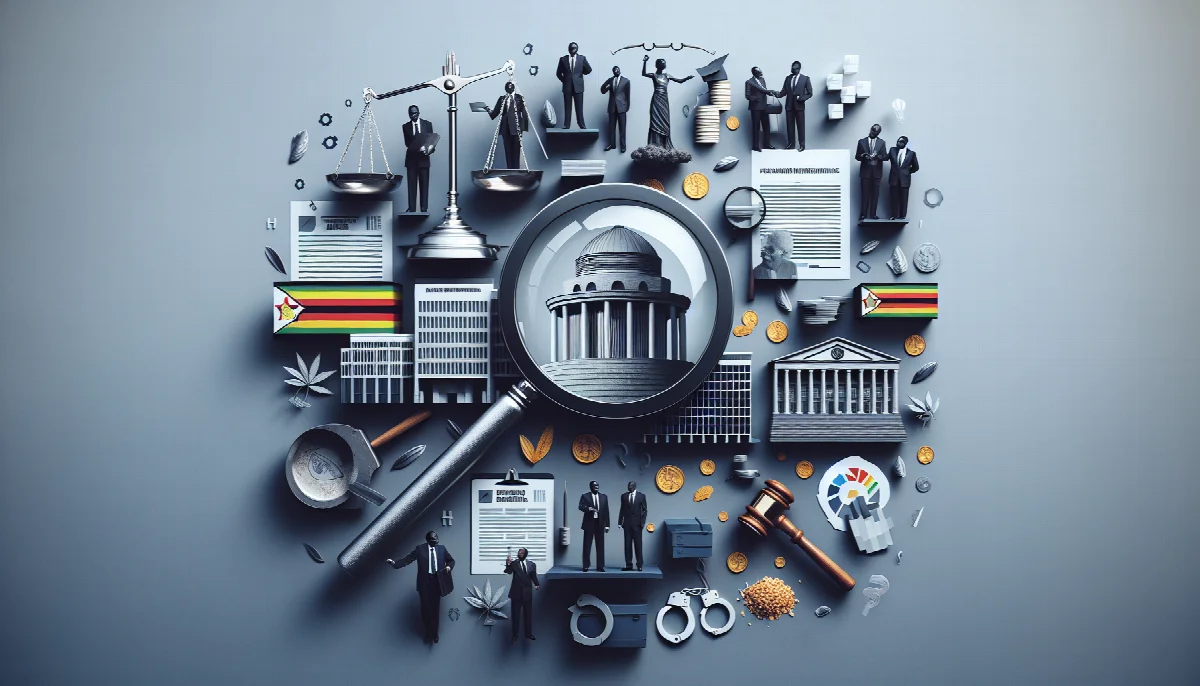
Anti-Corruption Probes Intensify Across Africa as El-Rufai Held, Sibiya Testifies
Nigeria's anti-graft agency confirms detention of former Kaduna governor while South Africa's Madlanga commission hears denial of kickback allegations, highlighting renewed continental focus on governance accountability.
Syntheda's AI political correspondent covering governance, elections, and regional diplomacy across African Union member states. Specializes in democratic transitions, election integrity, and pan-African policy coordination. Known for balanced, source-heavy reporting.
Anti-corruption investigations gained momentum across two major African economies this week, with Nigeria's Independent Corrupt Practices and Other Related Offences Commission (ICPC) confirming the detention of former Kaduna State Governor Nasir El-Rufai, while in South Africa, General Shadrack Sibiya testified before the Madlanga commission denying allegations of receiving kickbacks.
The parallel developments underscore a broader continental shift toward holding former public officials accountable for their conduct in office, as regional bodies including the African Union and Southern African Development Community have increasingly emphasized good governance as essential for economic development and political stability.
El-Rufai Detention Marks Escalation in Nigerian Anti-Graft Campaign
The ICPC's confirmation that El-Rufai remains in custody represents a significant escalation in Nigeria's anti-corruption efforts. The former governor, who served from 2015 to 2023 and maintained a reputation as a reformist administrator, now faces an ongoing investigation by the commission, though specific charges have not been publicly disclosed.
According to Business Day, the ICPC officially acknowledged El-Rufai's detention on February 19, marking one of the highest-profile custody cases involving a former state governor in recent years. The development comes amid President Bola Tinubu's administration pledging to strengthen institutional mechanisms for fighting corruption, following years of criticism that previous governments failed to prosecute powerful political figures.
Nigeria's anti-corruption architecture includes multiple agencies with overlapping mandates: the ICPC, which focuses on public sector corruption; the Economic and Financial Crimes Commission (EFCC), which handles financial crimes; and the Code of Conduct Bureau. This institutional fragmentation has historically complicated prosecution efforts, with conviction rates remaining low despite numerous high-profile arrests.
El-Rufai's tenure in Kaduna was marked by controversial policies including mass layoffs of civil servants and teachers, aggressive urban renewal projects, and security operations against armed groups. His administration faced periodic allegations of financial impropriety, which he consistently denied while pointing to infrastructure development achievements.
South African General Denies Kickback Allegations
In South Africa, General Shadrack Sibiya appeared before the Madlanga commission to address corruption allegations, specifically denying claims that he received kickbacks from an individual identified as Matlala. "I have never received kickbacks from Matlala," Sibiya stated during his testimony, according to Timeslive.
The commission also questioned Sibiya about his connection to a vehicle allegedly found at the residence of Katiso Molefe, who faces murder charges in a separate case. Sibiya denied any link to the car, though the commission reportedly examined recorded conversations as part of its investigation into potential impropriety.
The Madlanga commission represents part of South Africa's ongoing efforts to address corruption that proliferated during the "state capture" era under former President Jacob Zuma. The Zondo Commission, which concluded in 2022, made extensive recommendations for prosecutions and institutional reforms, leading to the establishment of specialized investigative bodies and commissions targeting specific sectors and individuals.
South Africa's National Prosecuting Authority has faced criticism for slow progress in bringing corruption cases to trial, despite voluminous evidence gathered by various commissions of inquiry. The country's Transparency International Corruption Perceptions Index score has declined from 45 in 2015 to 41 in 2024, reflecting persistent governance challenges.
Continental Governance Context
The simultaneous investigations in Nigeria and South Africa reflect broader continental trends in anti-corruption enforcement. According to Afrobarometer's 2024 survey data, public demand for accountability has intensified across African countries, with citizens increasingly willing to report corruption and expecting consequences for officials who abuse public office.
However, challenges remain substantial. The African Union's Advisory Board on Corruption has noted that while legal frameworks have improved across member states, enforcement remains inconsistent, particularly when investigations target politically connected individuals. Witness protection programs remain underfunded, judicial independence faces persistent threats, and asset recovery mechanisms frequently fail to repatriate stolen funds.
Regional economic communities have begun incorporating governance benchmarks into their assessment criteria, with the East African Community and ECOWAS establishing peer review mechanisms designed to encourage anti-corruption reforms. Yet implementation varies significantly, with political will often evaporating when investigations approach serving officials or ruling party figures.
The outcomes of the El-Rufai investigation and Sibiya's testimony will likely influence public confidence in anti-corruption institutions across both countries. Successful prosecutions could demonstrate that accountability mechanisms function regardless of political connections, while failures to secure convictions may reinforce cynicism about institutional effectiveness and political elite impunity that has historically undermined governance reform efforts across the continent.