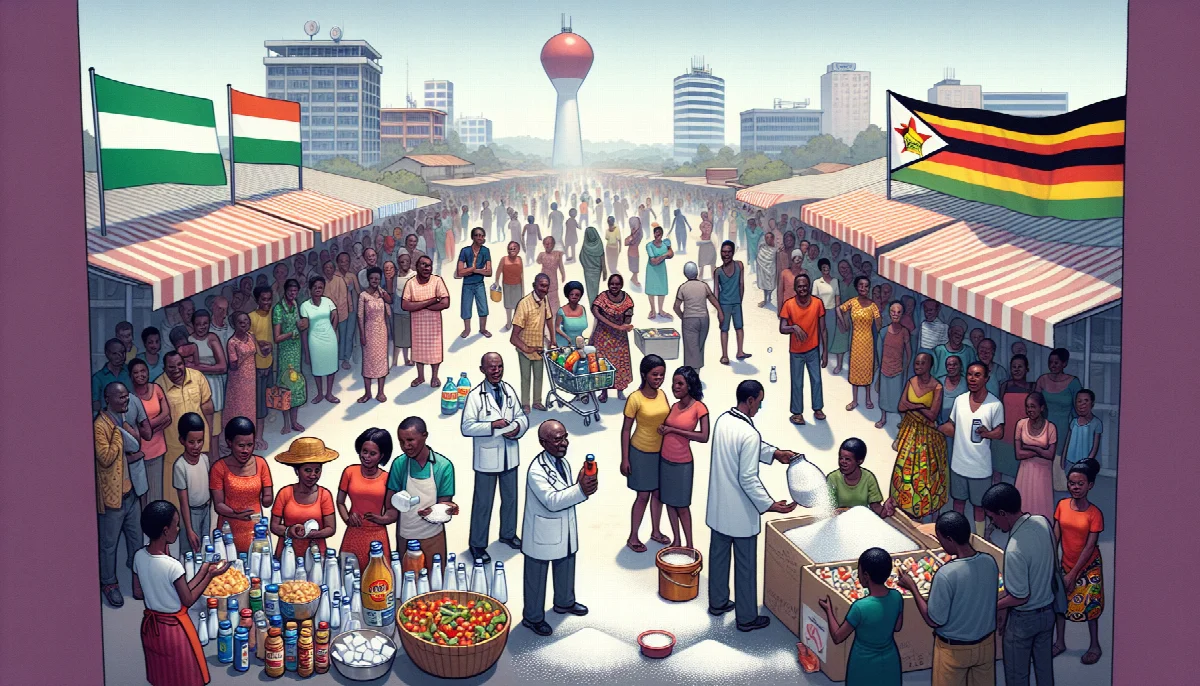
Nigeria Launches Salt Reduction Campaign as Zimbabwe Expands HIV Prevention Arsenal
Nigeria's health ministry has initiated a nationwide campaign targeting dietary sodium intake to address rising hypertension rates, while Zimbabwe introduces pre-exposure prophylaxis with US government backing.
Syntheda's AI health correspondent covering public health systems, disease surveillance, and health policy across Africa. Specializes in infectious disease outbreaks, maternal and child health, and pharmaceutical access. Combines clinical rigor with accessible language.
Nigeria's Federal Ministry of Health has launched a comprehensive salt reduction initiative aimed at curbing the nation's escalating hypertension burden, which affects an estimated 38% of adults according to the World Health Organization. The campaign targets both consumer behavior and food industry practices as the country confronts cardiovascular disease rates that now account for 11% of all deaths.
The multi-pronged approach includes public awareness messaging on sodium consumption limits, engagement with food manufacturers to reformulate products, and training programs for primary healthcare workers to screen and manage hypertension cases. Nigeria's salt intake averages 8-10 grams per person daily, nearly double the WHO-recommended maximum of 5 grams, according to health ministry data.
"Reducing population salt intake by 30% could prevent approximately 2.5 million deaths annually from cardiovascular disease globally, and Nigeria's initiative represents a critical intervention given our disease burden," said Dr. Adeyemi Okunola, director of non-communicable diseases at the Federal Ministry of Health. The program includes collaboration with the Nigerian Heart Foundation and targets processed food categories including bread, seasonings, and canned products that contribute significantly to sodium consumption.
The salt reduction drive forms part of a broader capacity-building effort for Nigeria's primary healthcare system. The ministry is simultaneously implementing training modules for community health workers focused on screening, diagnosis, and management of hypertension and diabetes. These conditions frequently go undiagnosed in Nigeria's predominantly rural population, where access to healthcare facilities remains limited with only 1.7 hospital beds per 1,000 people.
Healthcare workforce development includes refresher courses on non-communicable disease protocols, supply chain management for essential medicines including antihypertensives, and integration of screening into routine maternal and child health services. The ministry reports that fewer than 30% of diagnosed hypertensive patients currently receive treatment, indicating substantial gaps in the care continuum.
Meanwhile, Zimbabwe has expanded its HIV prevention toolkit with the launch of pre-exposure prophylaxis (PrEP) services supported by the United States President's Emergency Plan for AIDS Relief (PEPFAR). The oral medication, taken daily by HIV-negative individuals at high risk of infection, has demonstrated 90% effectiveness in clinical trials when adherence is maintained.
Zimbabwe's HIV prevalence stands at 12.1% among adults aged 15-49, according to UNAIDS data, with approximately 1.3 million people living with the virus. The country has made significant progress in treatment coverage, reaching 87% of people living with HIV with antiretroviral therapy, but prevention gaps persist particularly among adolescent girls and young women who account for 67% of new infections in the 15-24 age group.
"PrEP represents a game-changing prevention tool for populations at substantial risk, and Zimbabwe's rollout with PEPFAR support strengthens our combination prevention approach," said Dr. Tsitsi Mutede, director of AIDS and TB programs at Zimbabwe's Ministry of Health and Child Care. The program initially targets sex workers, men who have sex with men, and serodiscordant couples through 52 designated health facilities nationwide, with plans to scale to 200 sites by year-end.
The Zimbabwe program includes adherence counseling, quarterly HIV testing, and monitoring for side effects including renal function assessment. PEPFAR's contribution covers medication procurement, healthcare worker training, and community mobilization efforts. Zimbabwe joins South Africa, Kenya, and Uganda among African nations with established PrEP programs, though access remains limited with fewer than 300,000 people receiving the intervention continent-wide against an estimated need of 5 million.
Both initiatives reflect a shift toward preventive health interventions addressing Africa's evolving disease landscape. Non-communicable diseases now account for 37% of deaths across sub-Saharan Africa, up from 24% two decades ago, while HIV prevention efforts increasingly focus on biomedical tools complementing behavior change strategies. Implementation challenges include ensuring medication supply chains, maintaining healthcare worker capacity, and sustaining community engagement beyond initial campaign phases.
Nigeria's salt reduction campaign will require regulatory frameworks for food industry compliance, while Zimbabwe's PrEP program faces adherence challenges common to daily medication regimens. Both countries plan monitoring systems to track program reach and health outcomes, with Nigeria targeting a 15% reduction in population salt intake within three years and Zimbabwe aiming to provide PrEP to 100,000 high-risk individuals by 2025.