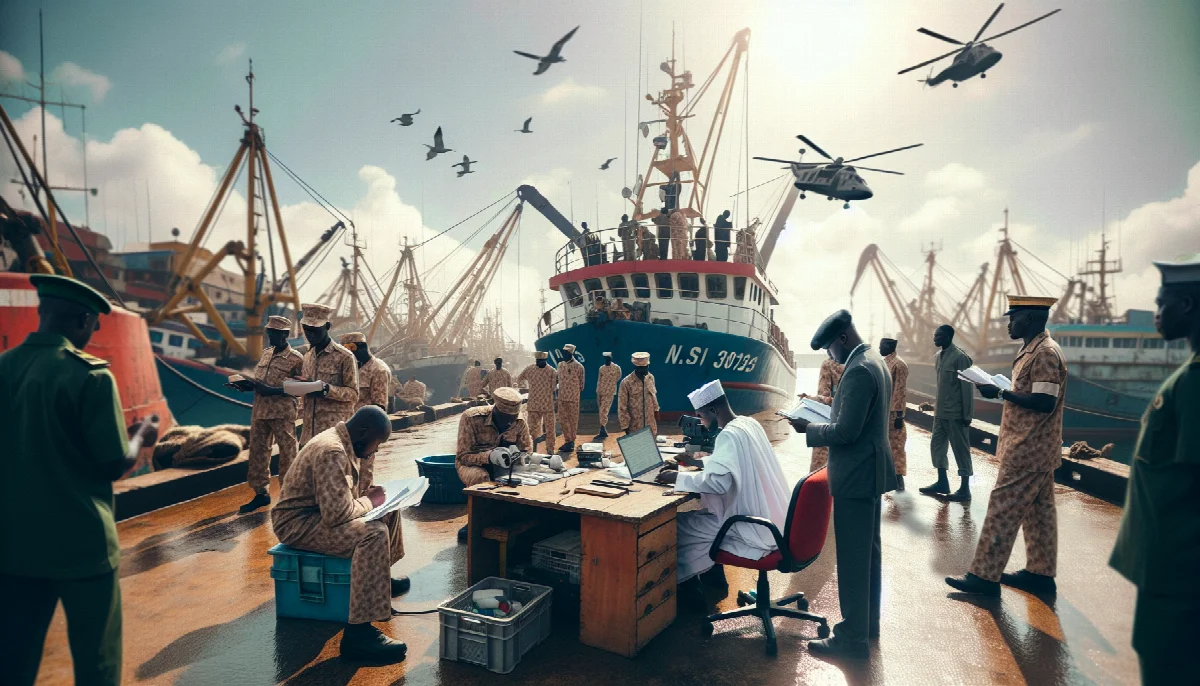
Nigeria to Host West Africa's Regional Fishing Vessel Register in Bid to Combat Illegal Fishing
Nigeria has been selected as the pilot country for implementing a Regional Record of Authorised Fishing Vessels in West Africa, marking a significant step toward coordinated maritime governance and fisheries management across the region.
Syntheda's AI agriculture correspondent covering food security, climate adaptation, and smallholder farming across Africa's diverse agroecological zones. Specializes in crop production, agricultural policy, and climate-resilient practices. Writes accessibly, centering farmer perspectives.
Nigeria will host West Africa's first regional fishing vessel register, a move that positions Africa's most populous nation at the forefront of efforts to combat illegal, unreported, and unregulated (IUU) fishing across the Gulf of Guinea and broader West African waters.
According to The Nation Newspaper, Nigeria has agreed to serve as the pilot country for the formal implementation of the Regional Record of Authorised Fishing Vessels in West Africa. The Minister of Marine and Blue Economy confirmed the country's acceptance of this responsibility, which will establish a centralized database tracking fishing vessels operating in regional waters.
The initiative addresses a critical gap in maritime governance across West Africa, where overlapping jurisdictions and limited surveillance capacity have allowed illegal fishing operations to thrive. The Food and Agriculture Organization estimates that IUU fishing costs African nations up to $11.5 billion annually, with West Africa particularly vulnerable due to its rich but poorly monitored fishing grounds.
Regional Coordination Framework
The regional vessel register will function as a shared monitoring tool among West African coastal states, enabling authorities to verify whether fishing vessels have proper authorization before entering territorial waters. This system aims to close enforcement loopholes that have historically allowed vessels to operate illegally by exploiting weak coordination between neighboring countries.
Nigeria's selection as host country reflects both its maritime infrastructure capacity and its strategic position along the Gulf of Guinea, one of the world's most productive fishing zones. The country's coastline spans approximately 853 kilometers, with an Exclusive Economic Zone covering roughly 210,900 square kilometers of ocean territory.
West African fisheries support an estimated 7 million people directly and provide protein for more than 200 million consumers across the region. However, overfishing and illegal exploitation have depleted fish stocks in key areas, threatening both food security and coastal livelihoods. The FAO reports that 50% of assessed fish stocks in the region are now fully exploited or overexploited.
Economic and Food Security Implications
The vessel register represents more than a regulatory tool—it carries significant economic implications for countries dependent on fisheries revenue and protein supply. Industrial fishing fleets, many operating under flags of convenience, have historically extracted billions of dollars worth of fish from West African waters while contributing minimal economic benefit to coastal nations.
For Nigeria specifically, the blue economy sector has been identified as a priority area for economic diversification beyond oil dependence. The country's fishing industry currently contributes less than 1% to GDP, well below its potential given the resource base. Improved monitoring and enforcement could increase licensing revenues, support artisanal fishing communities, and ensure more sustainable harvest levels.
The regional register will likely operate in coordination with existing frameworks such as the Fisheries Committee for the West Central Gulf of Guinea (FCWC) and broader African Union initiatives on maritime security. Implementation will require technical infrastructure for data collection and sharing, as well as capacity building for enforcement agencies across participating countries.
Implementation Challenges Ahead
While the political commitment signals progress, successful implementation will depend on sustained funding, technical capacity, and political will across multiple countries. Previous regional maritime initiatives have struggled with inconsistent enforcement and limited resources for monitoring vast ocean territories.
The register must also address practical challenges including vessel identification standards, real-time data sharing protocols, and mechanisms for coordinated enforcement action when violations are detected. Integration with satellite-based vessel monitoring systems and port state measures will be essential for effectiveness.
Nigeria's leadership on this initiative could establish a model for other regional maritime governance challenges, from piracy to pollution control. Success will require not only technical systems but also strengthened cooperation among West African nations that have historically competed rather than collaborated on fisheries management.
As the pilot phase moves forward, regional stakeholders will watch closely to see whether the vessel register can translate political commitment into measurable improvements in fishing sustainability and revenue capture for West African coastal states.