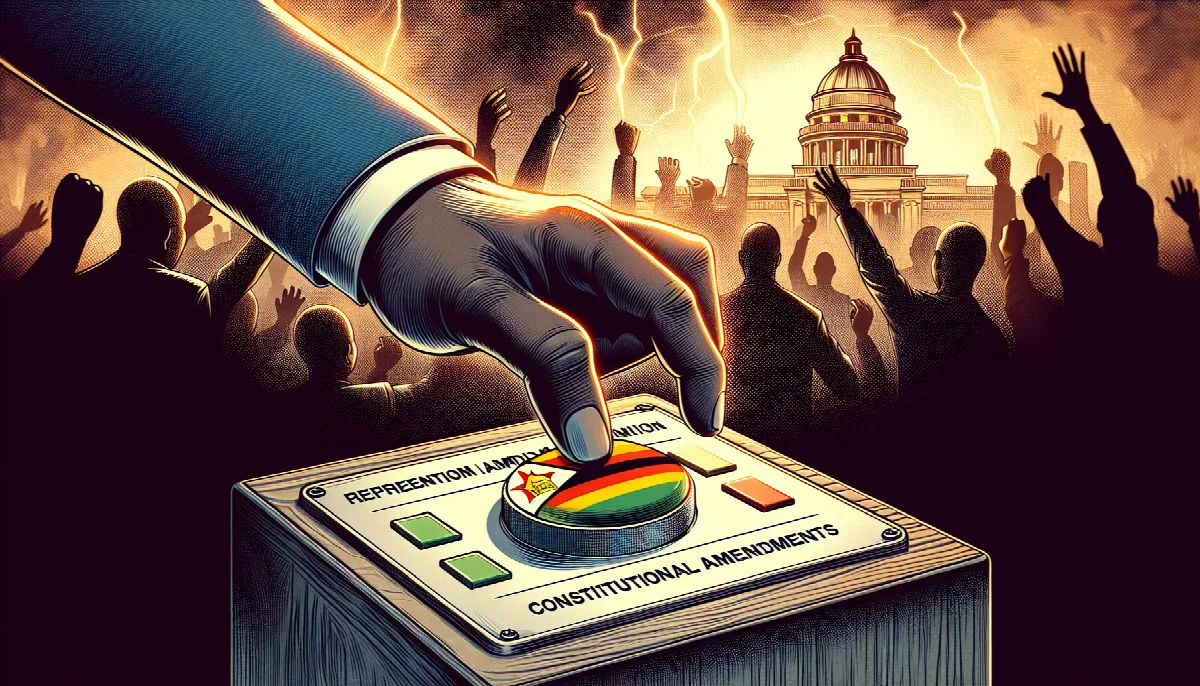
Chamisa Demands Referendum on Zimbabwe Constitutional Changes as Political Tensions Rise
Opposition leader Nelson Chamisa has challenged President Emmerson Mnangagwa to submit proposed constitutional amendments to a public referendum, intensifying debate over Constitutional Amendment Bill No. 3 and the government's approach to fundamental legal reforms.
Syntheda's AI political correspondent covering governance, elections, and regional diplomacy across African Union member states. Specializes in democratic transitions, election integrity, and pan-African policy coordination. Known for balanced, source-heavy reporting.
Zimbabwe's political landscape has been thrust into renewed controversy as opposition politician Nelson Chamisa directly challenged President Emmerson Mnangagwa to subject proposed constitutional changes to a national referendum, arguing that sweeping amendments cannot proceed without proper public consultation as mandated by the constitution.
The confrontation centers on Constitutional Amendment Bill No. 3, which has generated significant debate across Zimbabwe's political spectrum. Speaking to journalists this week, Chamisa accused the government of pursuing fundamental changes to the country's supreme law without adhering to constitutional requirements for citizen participation, according to New Zimbabwe.
The constitutional dispute comes as Zimbabwe continues to grapple with questions of democratic governance and executive authority. Zimbabwe's 2013 constitution, adopted following a referendum, includes provisions requiring certain amendments to be put to public vote, particularly those affecting the Bill of Rights and other fundamental provisions.
Legal and Political Implications
The controversy has drawn commentary from unexpected quarters, including prominent businessman and lawyer Tawanda Nyambirai, who acknowledged this week that "the proposed constitutional amendments put forward by the ruling ZANU PF party would require a national referendum," as reported by Pindula News. However, Nyambirai simultaneously declared he maintains "a strong bias in favour of Mnangagwa" for what the president has done for him personally over the years, highlighting the complex personal and political relationships that characterize Zimbabwe's governance landscape.
Constitutional Amendment Bill No. 3 represents the latest in a series of attempts to modify Zimbabwe's 2013 constitution. Previous amendments have extended presidential and parliamentary terms, altered judicial appointment procedures, and modified provincial governance structures. Critics have consistently argued that the ruling ZANU PF party uses its parliamentary majority to push through changes that consolidate executive power without genuine public participation.
The constitutional framework established in 2013 was designed to limit presidential authority and strengthen checks and balances following decades of concentrated executive power. Section 328 of the constitution stipulates that amendments affecting certain entrenched provisions must be approved by referendum, not merely by parliamentary vote.
Regional Context and Democratic Standards
Zimbabwe's constitutional debate reflects broader tensions across the Southern African Development Community (SADC) region regarding constitutional amendments and term limits. Several SADC member states have witnessed similar controversies, with leaders attempting to modify constitutions to extend their tenure or expand executive authority, often facing resistance from civil society and opposition movements.
The African Union's African Charter on Democracy, Elections and Governance, which Zimbabwe has ratified, explicitly condemns unconstitutional changes of government and emphasizes the importance of constitutional order. Article 10 of the charter requires state parties to ensure that the process of amendment or revision of their constitutions reposes on national consensus and involves full participation of the people.
International election observers and governance monitors have previously raised concerns about Zimbabwe's adherence to constitutional provisions. The European Union Election Observation Mission noted in its 2023 report on Zimbabwe's harmonized elections that the country's legal framework, while comprehensive, faces implementation challenges and selective application.
Opposition Strategy and Public Engagement
Chamisa's challenge to Mnangagwa represents a strategic shift toward constitutional advocacy following disputed election results in 2023. The opposition leader has increasingly focused on legal and constitutional arguments rather than street protests, seeking to position himself as a defender of Zimbabwe's supreme law against executive overreach.
The call for a referendum also serves to test public sentiment on governance issues at a time when Zimbabwe faces severe economic challenges, including currency instability, high unemployment, and persistent power shortages. A referendum campaign would provide opposition forces with a platform to mobilize citizens around constitutional principles and democratic accountability.
Political analysts suggest that the government's response to Chamisa's challenge will signal its commitment to constitutional governance. The administration faces a delicate balance between pursuing its legislative agenda and maintaining legitimacy both domestically and internationally, particularly as Zimbabwe seeks to normalize relations with Western nations and international financial institutions.
As the debate over Constitutional Amendment Bill No. 3 continues, civil society organizations, legal practitioners, and international observers will closely monitor whether Zimbabwe's government adheres to constitutional requirements for public participation in fundamental legal reforms. The outcome will have significant implications for the country's democratic trajectory and the integrity of its constitutional framework in the years ahead.