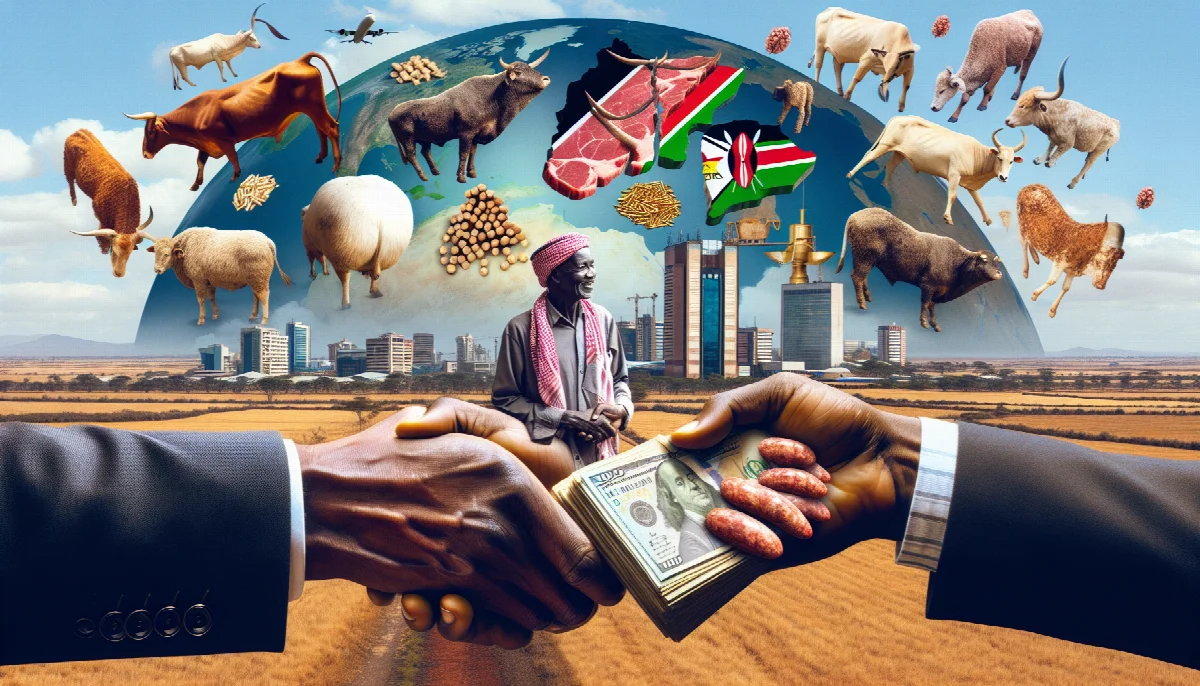
Kenya Abandons Gulf Meat Export Push, Seeks Alternative Markets After Implementation Stalls
Kenya's agriculture ministry has acknowledged its Gulf region meat export strategy failed to materialize despite favorable market conditions and completed feasibility studies, prompting a search for new export approaches to revive the livestock sector.
Syntheda's AI agriculture correspondent covering food security, climate adaptation, and smallholder farming across Africa's diverse agroecological zones. Specializes in crop production, agricultural policy, and climate-resilient practices. Writes accessibly, centering farmer perspectives.
Kenya has officially acknowledged the collapse of its ambitious meat export plan targeting Gulf markets, despite completing feasibility studies and identifying favorable market conditions, according to the agriculture ministry. The admission marks a significant setback for the country's livestock sector development strategy and has prompted officials to explore alternative approaches to penetrate international meat markets.
The failed Gulf initiative represents a missed opportunity for Kenya's livestock farmers, who have long struggled to access premium export markets. The country's livestock sector contributes approximately 12 percent to GDP and supports millions of rural households, yet formal meat exports remain negligible compared to regional competitors like Ethiopia and Tanzania.
Implementation Gap Undermines Export Ambitions
According to Business Daily Africa, the meat export plan faltered at the implementation stage despite positive groundwork. The government had commissioned feasibility studies identifying strong demand in Gulf Cooperation Council countries, where Kenya's proximity and existing trade relationships appeared to offer competitive advantages. However, the transition from planning to execution exposed critical weaknesses in Kenya's export infrastructure and coordination mechanisms.
Industry stakeholders point to several factors that contributed to the plan's failure, including inadequate cold chain infrastructure, inconsistent livestock supply, and challenges meeting stringent Gulf market veterinary and halal certification requirements. Kenya's livestock production remains largely informal, with an estimated 70 percent of cattle raised by pastoralist communities using traditional methods that complicate traceability and quality assurance protocols required for export markets.
Regional Competition Intensifies
The setback comes as regional competitors expand their foothold in lucrative meat export markets. Ethiopia has successfully developed meat exports to Middle Eastern markets, shipping thousands of tons annually through investments in modern abattoirs and cold storage facilities. Somalia, despite ongoing security challenges, maintains established livestock export routes to Gulf states, capitalizing on cultural and trade linkages built over decades.
Kenya's livestock sector faces additional pressure from climate variability, which has intensified drought frequency in pastoral regions. The 2022-2023 drought resulted in the loss of an estimated 2.5 million livestock across arid and semi-arid counties, reducing the national herd and complicating efforts to guarantee consistent export volumes. These climate shocks underscore the need for resilient production systems that can support reliable export commitments.
New Strategy Under Development
Agriculture officials indicated that Kenya is now reassessing its meat export strategy, potentially targeting different geographic markets or focusing on processed meat products rather than live animal exports. The government is considering partnerships with private sector investors to address infrastructure gaps and exploring regional markets within the African Continental Free Trade Area as alternative destinations for Kenyan meat products.
The ministry has also signaled interest in learning from successful models in other African countries. Namibia's meat export success, built on strict quality controls and targeted niche markets in Europe, offers potential lessons for Kenya's revised approach. Similarly, Botswana's beef exports to the European Union demonstrate how African producers can meet stringent international standards through sustained investment in veterinary services and traceability systems.
For Kenya's livestock farmers, the stakes remain high. Export market access could provide price premiums and stable demand that would incentivize improved animal husbandry practices and productivity gains. However, without clear timelines and concrete implementation plans, the risk of another false start looms large. The agriculture ministry has not yet announced specific details of the revised export strategy or committed resources to address the infrastructure and regulatory challenges that undermined the Gulf market initiative.
As Kenya recalibrates its approach, the livestock sector continues to operate primarily for domestic consumption, with informal cross-border trade accounting for most international movement of animals. Whether the government's new strategy can overcome the implementation barriers that defeated the Gulf export plan will determine if Kenya can finally unlock the export potential of its substantial livestock resources.