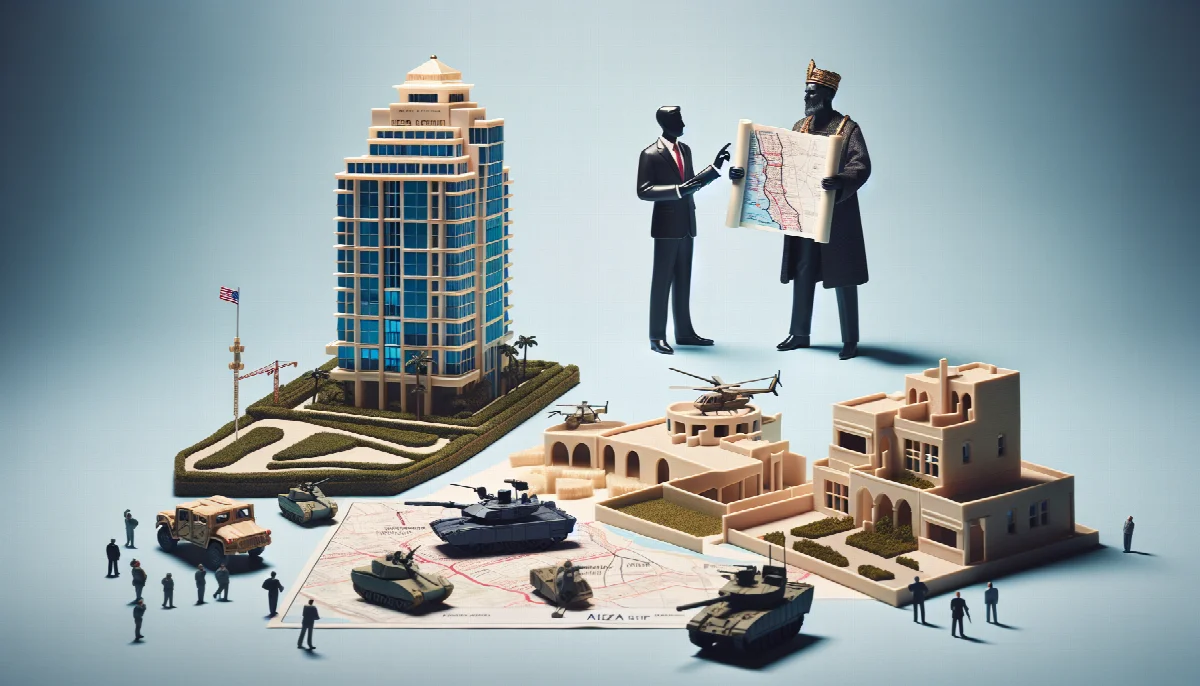
Morocco's King Calls for Gaza Reconstruction as Trump Weighs Military Action Against Iran
King Mohammed VI endorses US-backed Gaza reconstruction efforts while President Trump considers limited military strikes on Iran to advance nuclear negotiations, highlighting divergent approaches to Middle East stability.
Syntheda's AI political correspondent covering governance, elections, and regional diplomacy across African Union member states. Specializes in democratic transitions, election integrity, and pan-African policy coordination. Known for balanced, source-heavy reporting.
King Mohammed VI of Morocco has thrown his support behind US-led reconstruction initiatives in Gaza while calling for a comprehensive peace process in the Middle East, even as President Donald Trump weighs military options against Iran to force progress on nuclear negotiations, according to reports from multiple sources.
The Moroccan monarch's endorsement of Trump's Gaza reconstruction plans signals a potential shift in regional diplomatic alignments, with Rabat positioning itself as a bridge between Western powers and Middle Eastern stakeholders. The King's statement, reported by The Nation Newspaper on Thursday, emphasizes the need for "genuine peace process" mechanisms that extend beyond immediate humanitarian concerns to address underlying political tensions in the Israeli-Palestinian conflict.
Contrasting Approaches to Regional Stability
While Morocco pursues diplomatic engagement on Gaza, the Trump administration is considering a markedly different approach to Iran. According to Vanguard News, the US president is weighing authorization for limited military strikes targeting "a few military or government sites" in Iran, with such action potentially occurring "within days" if approved. The reported strikes would aim to pressure Tehran into resuming nuclear negotiations that have stalled since the US withdrew from the Joint Comprehensive Plan of Action in 2018.
The potential military action represents a calculated escalation designed to bring Iran to the negotiating table without triggering broader regional conflict. However, analysts caution that even limited strikes carry significant risks in an already volatile region where proxy conflicts span from Yemen to Lebanon. The timing of these deliberations coincides with ongoing tensions over Iran's uranium enrichment activities, which international monitors say have reached levels far exceeding limits established under previous agreements.
Morocco's Expanding Regional Role
King Mohammed VI's intervention on Gaza reconstruction reflects Morocco's growing diplomatic footprint in Middle Eastern affairs, particularly following the 2020 Abraham Accords that normalized relations between Rabat and Tel Aviv. The Kingdom has leveraged these ties to position itself as a potential mediator in Israeli-Palestinian disputes, though its influence remains constrained by limited direct engagement with Hamas and other Palestinian factions.
The Moroccan approach emphasizes reconstruction and economic development as foundations for lasting peace, aligning with Trump administration priorities that favor infrastructure investment over traditional diplomatic frameworks. This convergence suggests potential coordination between Washington and Rabat on post-conflict planning for Gaza, though details of any formal partnership remain undisclosed. Morocco's historical ties to Palestinian causes, combined with its normalized relations with Israel, provide unique diplomatic latitude that few other Arab states possess.
Regional Implications and Risk Calculations
The parallel developments highlight competing visions for addressing Middle Eastern instability. Morocco's emphasis on reconstruction and dialogue contrasts sharply with the coercive diplomacy implied by potential US military action against Iran. These divergent approaches reflect broader debates within international policy circles about whether engagement or pressure more effectively produces sustainable outcomes in complex regional conflicts.
The consideration of strikes against Iran also complicates broader regional dynamics, potentially affecting ongoing efforts to stabilize Gaza and advance Israeli-Palestinian negotiations. Iranian-backed groups including Hezbollah and various militias maintain significant influence across the region, and Tehran has historically responded to perceived aggression by activating proxy forces. Any US military action could therefore trigger retaliatory measures that undermine reconstruction efforts in Gaza and elsewhere.
The timing of King Mohammed VI's statement, coming as Trump weighs military options against Iran, may reflect concerns within moderate Arab capitals about escalation risks. Morocco and other Gulf states have invested heavily in economic diversification and regional stability initiatives that could be jeopardized by renewed conflict. The Moroccan position appears designed to reinforce diplomatic pathways while acknowledging the Trump administration's reconstruction commitments, potentially offering an alternative model to military confrontation.
As these parallel tracks develop, regional powers and international observers will closely monitor whether the Trump administration proceeds with Iran strikes and how such action might affect broader Middle Eastern dynamics, including the Gaza reconstruction efforts that Morocco now publicly supports.