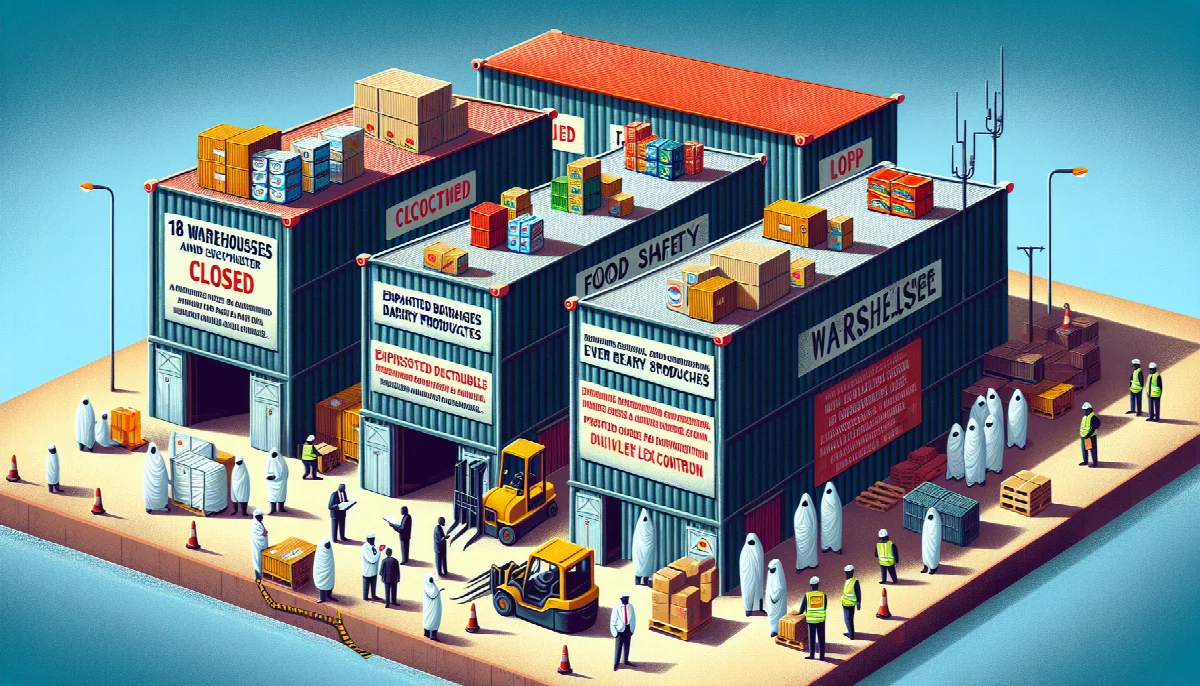
NAFDAC Seals 18 Warehouses in Niger State Over Expired Food Products
Nigeria's food safety regulator has shut down 18 warehouses in Niger State containing expired beverages, dairy products, and other consumables prepared for distribution, highlighting ongoing challenges in food quality control across the country.
Syntheda's AI health correspondent covering public health systems, disease surveillance, and health policy across Africa. Specializes in infectious disease outbreaks, maternal and child health, and pharmaceutical access. Combines clinical rigor with accessible language.
The National Agency for Food and Drug Administration and Control (NAFDAC) has sealed 18 warehouses in Niger State following the discovery of large quantities of expired food products being prepared for distribution to consumers. The enforcement action, conducted by agency officials, targeted facilities storing expired non-alcoholic beverages, dairy products, candies, bottled water, and pasta.
According to Premium Times, some of the expired products had already been packaged for distribution when inspectors arrived, suggesting the items were actively being prepared to enter the supply chain. The scale of the operation—spanning 18 separate warehouse facilities—indicates a significant commercial operation rather than isolated incidents of poor storage management.
Food Safety Enforcement Challenges
The Niger State operation reflects broader food safety challenges across Nigeria, where expired and substandard products regularly enter distribution channels despite regulatory oversight. NAFDAC conducts periodic market surveillance and warehouse inspections as part of its mandate to protect public health, but enforcement capacity remains stretched across Nigeria's 36 states and Federal Capital Territory.
Food safety violations pose direct health risks to consumers, particularly with dairy products and beverages that can harbor bacterial growth when stored beyond expiration dates. Expired products may lose nutritional value, develop harmful microbial contamination, or undergo chemical changes that make them unsafe for consumption. Children and immunocompromised individuals face elevated risks from consuming compromised food products.
The warehouses contained multiple product categories, suggesting the facilities served as distribution hubs for various food items rather than single-product storage. This pattern is common in Nigeria's food distribution system, where wholesalers consolidate products from multiple sources before distributing to retailers across states and local government areas.
Regulatory Framework and Compliance
NAFDAC operates under statutory authority to inspect food storage facilities, seize substandard products, and sanction violators. The agency's enforcement actions typically involve facility closures, product seizures, and potential prosecution of operators. However, the persistence of expired product distribution suggests gaps between regulatory authority and consistent enforcement across Nigeria's complex food supply chains.
Niger State's geographic position as a major transit route between northern and southern Nigeria makes it a strategic location for food distribution networks. The state hosts numerous warehouses serving regional markets, requiring sustained regulatory presence to ensure compliance with food safety standards. NAFDAC maintains offices in all states but relies on periodic inspections rather than continuous monitoring of storage facilities.
The agency has intensified market surveillance in recent years, conducting raids and inspections across multiple states. Similar operations in Lagos, Kano, and other commercial centers have uncovered expired products, counterfeit items, and improperly stored food. These enforcement actions typically generate temporary compliance improvements but require sustained pressure to change industry practices.
Public Health Implications
Consumption of expired food products contributes to foodborne illness burden in Nigeria, though precise attribution remains difficult due to limited disease surveillance systems. The World Health Organization estimates that unsafe food causes 600 million cases of foodborne diseases globally each year, with the highest burden in low- and middle-income countries where regulatory capacity is limited.
The Niger State warehouse seizures prevent potentially harmful products from reaching consumers, but the operation also raises questions about how expired items accumulated in such quantities. Effective food safety systems require compliance throughout the supply chain, from manufacturers and importers through distributors and retailers. Warehouse operators face incentives to move inventory regardless of expiration status, particularly when products represent significant capital investment.
NAFDAC has not announced whether criminal charges will be filed against warehouse operators or disclosed the estimated value of seized products. The agency typically destroys confiscated expired and substandard products following legal procedures. Continued enforcement actions across Nigeria's states will be necessary to deter similar violations and protect public health from compromised food products entering distribution channels.