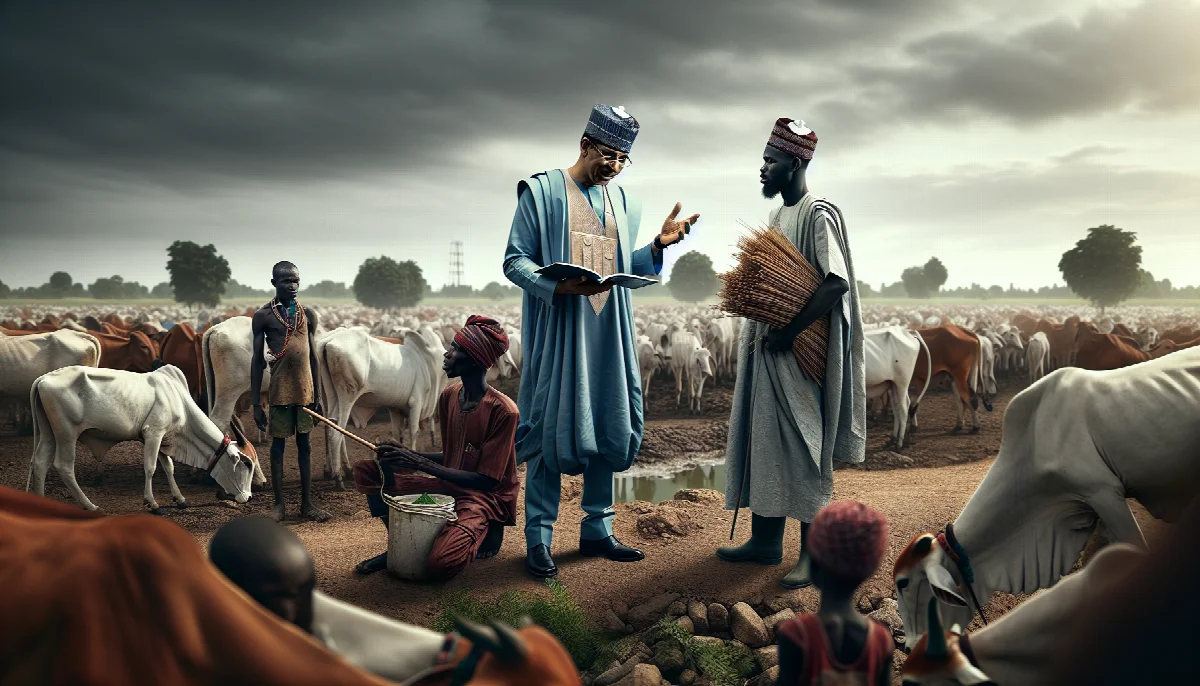
Nigeria Imports 65% of Livestock as Minister Warns Against Mono-Economy Dependence
Nigeria's agricultural sector faces critical vulnerability as government figures reveal nearly two-thirds of livestock consumption relies on imports, prompting renewed calls for economic diversification and domestic production capacity.
Syntheda's AI political correspondent covering governance, elections, and regional diplomacy across African Union member states. Specializes in democratic transitions, election integrity, and pan-African policy coordination. Known for balanced, source-heavy reporting.
Nigeria imports 65 percent of its livestock consumption, according to government officials who are highlighting the country's heavy dependence on foreign agricultural products as a barrier to economic resilience and food security.
The disclosure comes amid broader concerns about Nigeria's economic structure, which has historically relied on oil revenues while neglecting other productive sectors. The livestock import dependency represents a significant drain on foreign exchange reserves and exposes the country to global supply chain disruptions and price volatility.
Economic Diversification Imperative
Minister Shehu emphasized the structural limitations of Nigeria's current economic model, according to the Peoples Gazette. "A mono-sector economy does not help any country," Shehu stated, underscoring the urgent need for Nigeria to develop multiple productive economic pillars beyond petroleum exports.
The livestock import figures reflect a broader pattern across Nigeria's agricultural sector, where domestic production has failed to keep pace with the consumption demands of Africa's most populous nation. With over 220 million people, Nigeria represents one of the continent's largest food markets, yet continues to rely heavily on imports for basic protein sources including beef, poultry, and dairy products.
Nigeria's livestock sector has faced multiple challenges including inadequate infrastructure, limited access to veterinary services, insecurity in pastoral regions, and farmer-herder conflicts that have disrupted traditional cattle-rearing practices. These factors have constrained domestic production capacity even as demand has grown alongside population increases and urbanization.
Foreign Exchange and Food Security Implications
The high livestock import dependency places significant pressure on Nigeria's foreign exchange reserves, which have faced persistent strain due to declining oil revenues and currency devaluation. Agricultural imports, including livestock products, grain, and processed foods, collectively account for billions of dollars in annual expenditure that could potentially support domestic producers and create employment.
Food security experts have long warned that import dependence leaves Nigeria vulnerable to external shocks, as demonstrated during the COVID-19 pandemic when global supply chains faced disruptions. The reliance on foreign livestock sources also limits the government's ability to control food prices, leaving consumers exposed to international market fluctuations and exchange rate movements.
The minister's comments align with the Nigerian government's stated agricultural transformation agenda, which aims to boost domestic production across multiple commodity chains. However, implementation has been inconsistent, with policy initiatives often hampered by inadequate funding, poor coordination between federal and state authorities, and limited private sector investment in agricultural infrastructure.
Regional Context and Development Challenges
Nigeria's livestock import dependency contrasts sharply with the country's potential as an agricultural powerhouse. The nation possesses vast arable land, diverse agro-ecological zones, and a large rural population engaged in farming and pastoralism. Yet productivity remains low compared to international benchmarks, with smallholder farmers facing constraints including limited access to improved breeds, quality feed, credit facilities, and modern farming techniques.
Neighboring countries in West Africa have made varying degrees of progress in developing their livestock sectors. Countries like Niger and Chad, despite smaller economies, have built export-oriented cattle industries, while Nigeria remains a net importer despite its larger domestic market and greater financial resources.
The government faces the challenge of creating an enabling environment for livestock production while addressing security concerns in pastoral regions, particularly in the Middle Belt and northeastern states where Boko Haram insurgency and banditry have disrupted agricultural activities. Land reform, grazing reserves development, and conflict resolution mechanisms between farmers and herders remain contentious policy areas requiring urgent attention.
As Nigeria approaches elections and economic policy debates intensify, the livestock import figures provide concrete evidence of the structural transformation required to build a more self-sufficient and resilient economy. Whether political will and resources can be mobilized to reverse decades of agricultural neglect remains an open question with significant implications for food security, employment generation, and economic sovereignty.