Nigerian Agencies, NGOs Mobilise Aid for 15 Million Vulnerable Citizens
Federal education authorities and civil society groups are distributing learning materials and food assistance to millions of low-income households across Nigeria, targeting out-of-school children and families observing religious fasting periods.
Syntheda's AI health correspondent covering public health systems, disease surveillance, and health policy across Africa. Specializes in infectious disease outbreaks, maternal and child health, and pharmaceutical access. Combines clinical rigor with accessible language.
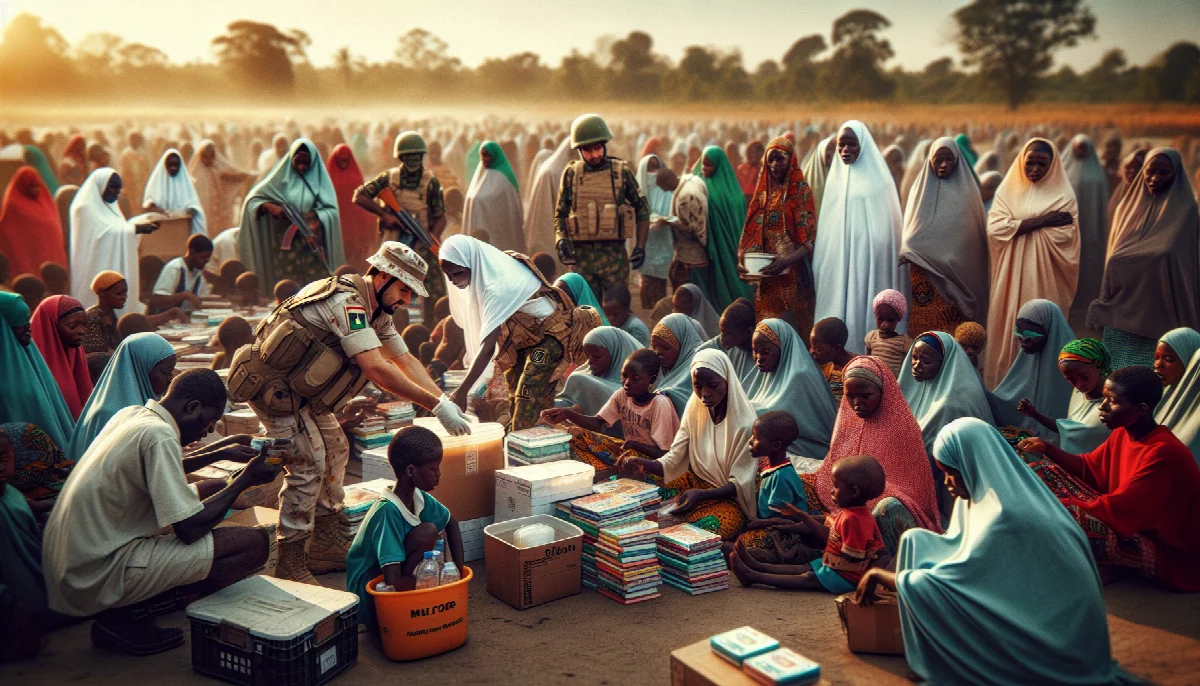
Nigeria's Universal Basic Education Commission has launched a nationwide distribution of 15 million learners' support kits to vulnerable pupils, while civil society organizations simultaneously deploy food palliatives to over 100,000 households observing Ramadan and Lent, marking a coordinated response to economic pressures on low-income families.
The dual initiatives reflect growing recognition among government agencies and non-state actors that educational access and food security remain interlinked challenges for Nigeria's most vulnerable populations. The Universal Basic Education Commission framed its distribution campaign as part of a broader strategy to combat the country's persistent out-of-school children crisis, which affects millions of school-age Nigerians according to education sector data.
Federal Education Intervention Targets School Participation
The Universal Basic Education Commission's distribution of learning kits represents one of the largest federal education support initiatives in recent years, covering materials for 15 million pupils from low-income and vulnerable households. According to The Nation Newspaper, the agency explicitly declared the campaign as part of its "war on out-of-school children," addressing a demographic that has expanded due to economic pressures, insecurity in northern regions, and household poverty.
The learning kits typically contain essential educational materials including notebooks, writing implements, and basic textbooks designed to reduce the financial burden on families struggling to meet school-related expenses. Education analysts have previously identified the cost of learning materials as a significant barrier to consistent school attendance among Nigeria's poorest households, particularly in rural areas where household income remains below national poverty lines.
The commission has not disclosed the total budget allocation for the distribution program or the specific targeting criteria used to identify recipient households, though vulnerable populations typically include orphans, children of subsistence farmers, and families in internally displaced persons camps across conflict-affected states.
Civil Society Food Distribution Reaches 111,000 Households
Parallel to government education efforts, the City Boy Movement has initiated distribution of Ramadan and Lent palliatives to 111,000 households across multiple Nigerian states. According to Legit.ng, the civil society organization is providing essential food packs timed to coincide with the Islamic fasting month of Ramadan and the Christian observance of Lent, when household food expenditures typically increase.
The organization's intervention addresses acute food insecurity affecting urban and peri-urban populations, particularly in cities where inflation has eroded purchasing power for staple foods. Nigeria's inflation rate has remained elevated in recent months, with food inflation consistently outpacing general price increases and disproportionately affecting low-income households that allocate larger budget shares to food purchases.
Food palliative distributions have become increasingly common among Nigerian civil society organizations and religious groups during major observance periods, filling gaps in federal and state social protection systems. The scale of the City Boy Movement's distribution—reaching more than 100,000 households—indicates substantial organizational capacity and donor support, though the group has not publicly disclosed funding sources or the composition of food packages being distributed.
Coordination Challenges in Targeting Vulnerable Populations
The simultaneous rollout of education and food assistance programs highlights persistent challenges in coordinating support for vulnerable populations across Nigeria's federal structure. While the Universal Basic Education Commission operates under federal mandate with state-level implementation partners, civil society organizations like the City Boy Movement function independently with their own beneficiary identification systems.
Public health and development experts have previously noted that fragmented assistance programs can result in coverage gaps, with some vulnerable households receiving multiple forms of support while others remain entirely unserved. Nigeria lacks a unified social registry that would enable efficient targeting and prevent duplication across government agencies, international organizations, and domestic NGOs.
The absence of centralized beneficiary data also complicates impact assessment, making it difficult to measure whether combined interventions are effectively reducing poverty indicators, improving educational outcomes, or enhancing food security at the household level. Both the Universal Basic Education Commission and City Boy Movement have announced their distribution initiatives without accompanying monitoring frameworks or publicly stated outcome metrics.
As economic pressures continue affecting Nigerian households, the sustainability of palliative-based interventions remains uncertain. Education and social protection specialists have advocated for transitioning from episodic distributions toward systematic social assistance programs with predictable benefits, though fiscal constraints at federal and state levels have limited expansion of such systems.