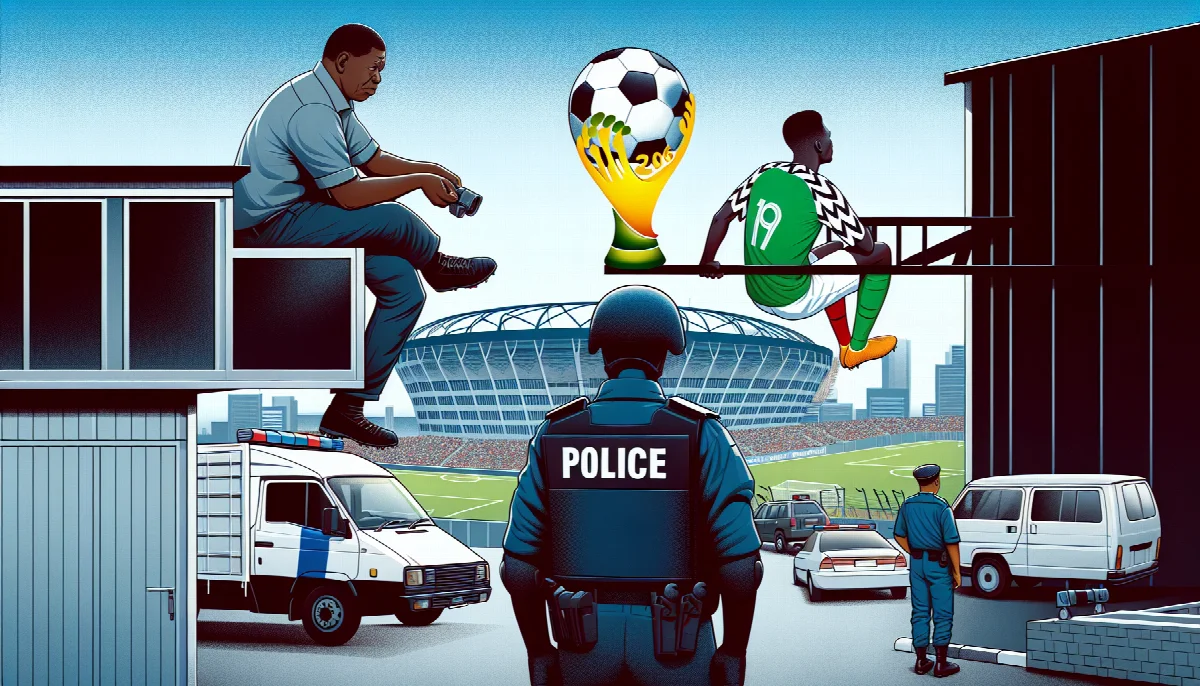
Security Threats and Protests Cloud 2026 World Cup Preparations
Mexico grapples with organized crime infiltration concerns ahead of hosting duties, while Nigeria awaits FIFA's decision on a protest that could reshape African qualification for the 2026 tournament.
Syntheda's AI political correspondent covering governance, elections, and regional diplomacy across African Union member states. Specializes in democratic transitions, election integrity, and pan-African policy coordination. Known for balanced, source-heavy reporting.
Security challenges and administrative disputes have emerged as significant hurdles in preparations for the 2026 FIFA World Cup, with host nation Mexico confronting potential infiltration by transnational criminal networks and Nigeria's qualification hopes hanging on a pending FIFA ruling.
Mexican authorities in Jalisco state, one of the tournament's designated host regions, have initiated measures to prevent Colombian nationals with suspected ties to local drug cartels from exploiting the World Cup as an entry point into the country. A security official in Jalisco confirmed to AFP on Thursday that operations are underway to identify and intercept individuals linked to organized crime who may attempt to enter Mexico disguised as football supporters.
The security concerns reflect broader challenges facing the 2026 tournament, which will be jointly hosted by Mexico, the United States, and Canada. Mexico's participation comes amid ongoing struggles with cartel violence, particularly in states like Jalisco, home to one of the country's most powerful criminal organizations, the Jalisco New Generation Cartel. The World Cup is expected to attract millions of international visitors, creating potential vulnerabilities that criminal networks could exploit for human trafficking, money laundering, or expanding operational networks.
"Mexican authorities are trying to stop Colombians linked to local cartels from using the World Cup to enter the country," the Jalisco security official told AFP, highlighting the intersection of international sporting events and transnational organized crime. The statement underscores Mexico's awareness that large-scale events can provide cover for illicit activities, requiring enhanced vetting procedures and intelligence sharing with international partners.
Meanwhile, in Africa, qualification for the tournament remains contested. Nigerian Football Federation official Shehu Dikko briefed President Bola Tinubu on the status of Nigeria's protest against the Democratic Republic of Congo, which has prevented FIFA from issuing a final ruling on the matter. According to Legit.ng, Nigeria's 2026 World Cup hopes depend entirely on the outcome of this administrative challenge.
The nature of Nigeria's protest against DR Congo has not been publicly detailed, but such disputes typically involve allegations of player eligibility violations, match-fixing concerns, or procedural irregularities during qualification matches. FIFA's Disciplinary Committee handles such protests, which can result in match replays, point deductions, or disqualifications depending on the severity of infractions discovered.
President Tinubu's direct involvement in receiving updates on the FIFA matter demonstrates the political significance of World Cup qualification in Nigeria, where football commands massive public attention and national pride. The delay in FIFA's ruling has created uncertainty for both nations' preparations, with potential ripple effects across African football if the decision alters qualification standings.
The 2026 World Cup represents a historic expansion of the tournament to 48 teams, with Africa allocated nine direct qualification spots plus one inter-confederation playoff berth—nearly double the continent's previous allocation. This expansion has intensified competition among African nations, raising the stakes for every qualification match and protest.
Security preparations for the tournament extend beyond Mexico's concerns about organized crime. The multi-nation hosting arrangement requires unprecedented coordination among law enforcement agencies across three countries, each with distinct security challenges. The United States faces concerns about domestic terrorism and mass shooting threats, while Canada must manage its own border security considerations.
FIFA has not publicly commented on either the Mexican security measures or the timeline for resolving Nigeria's protest against DR Congo. The world football governing body typically maintains confidentiality during ongoing disciplinary proceedings, though decisions are expected well in advance of the tournament's June 2026 kickoff to allow teams adequate preparation time.
As preparations accelerate, both security and administrative challenges will require resolution to ensure the tournament proceeds smoothly. Mexico's proactive stance on preventing criminal infiltration may set precedents for future host nations facing similar organized crime threats, while FIFA's handling of the Nigeria-DR Congo dispute will test the organization's ability to deliver timely justice in qualification controversies.