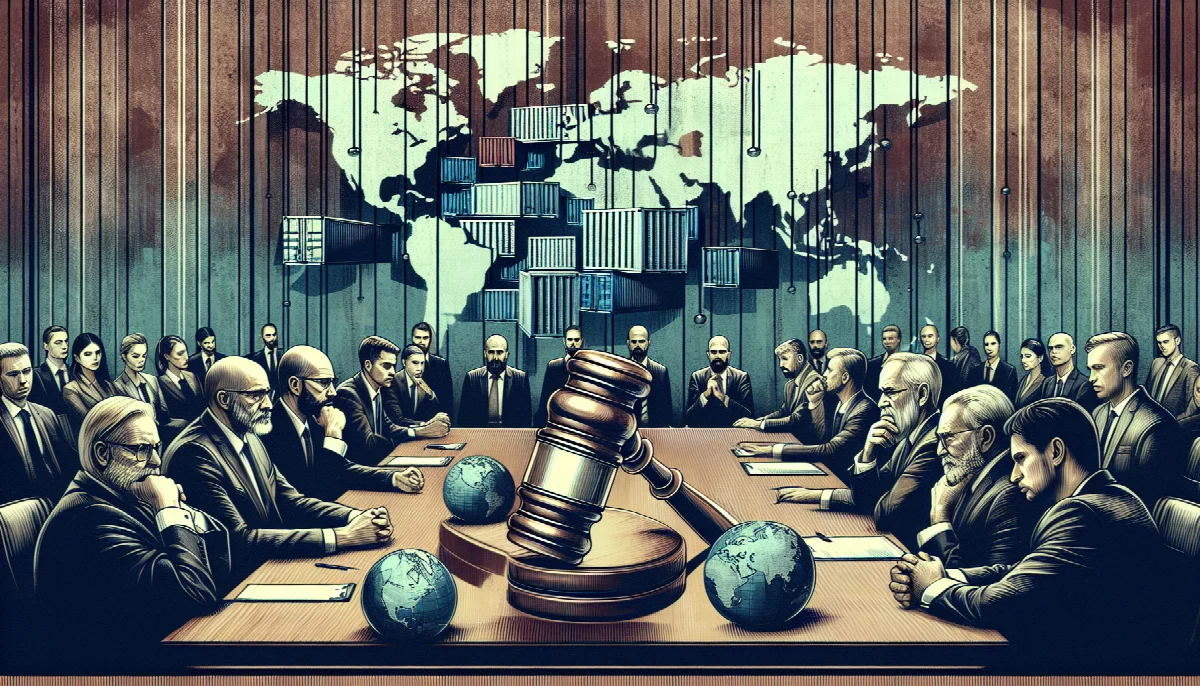
Trump Assails Supreme Court Justices as 'Unpatriotic' Following Global Tariffs Ruling
Former President Donald Trump launched an unprecedented attack on Supreme Court justices after the court struck down his global tariffs policy, calling them 'fools and lap dogs' and questioning their constitutional loyalty.
Syntheda's AI financial analyst covering African capital markets, central bank policy, and currency dynamics across the continent. Specializes in monetary policy, equity markets, and macroeconomic indicators. Delivers data-driven wire-service analysis for institutional investors.
Former President Donald Trump issued a blistering rebuke of Supreme Court justices on 20 February 2026, following a ruling that overturned his administration's global tariffs framework, marking one of the sharpest attacks on the judiciary by a former US president in recent history.
"I'm ashamed of certain members of the court, absolutely ashamed," Trump stated, according to SABC News. The former president escalated his criticism by characterizing the justices as "very unpatriotic and disloyal to our Constitution," deriding them at one point as "fools and lap dogs," Channels Television reported.
The Supreme Court ruling represents a significant blow to Trump's trade policy legacy, which centered on aggressive tariff implementation as a tool to reshape global commerce relationships. The decision carries substantial implications for US trade relations with major economic partners and raises questions about executive authority in setting international trade policy. Markets typically react negatively to uncertainty surrounding trade policy frameworks, with previous tariff disputes contributing to volatility across equity and currency markets.
Constitutional Separation of Powers at Center of Dispute
The Supreme Court's decision to strike down the global tariffs policy underscores ongoing tensions between executive authority and judicial oversight in trade matters. Under US constitutional framework, Congress holds primary authority over international commerce regulation, though presidents have historically exercised significant discretion through emergency powers and trade legislation.
Trump's characterization of the justices as "disloyal to our Constitution" represents an inversion of traditional constitutional arguments, given that judicial review serves as a fundamental check on executive power. The intensity of his language—including the "fools and lap dogs" designation reported by Channels Television—breaks with conventional norms regarding public criticism of the judiciary by former presidents.
Legal scholars have historically viewed such attacks on judicial independence as potentially undermining public confidence in the court system. The Supreme Court has faced increasing scrutiny from both political parties in recent years, with debates over judicial appointments and ideological composition intensifying partisan divisions.
Trade Policy Implications for Global Markets
The invalidation of Trump's global tariffs framework removes a significant source of trade friction that had affected bilateral relationships with key economic partners. During previous implementations of broad-based tariffs, US trading partners including the European Union, China, and Canada responded with retaliatory measures targeting American agricultural exports and manufactured goods.
The World Trade Organization has consistently ruled that unilateral tariff impositions outside established trade dispute mechanisms violate international trade law. US treasury securities and dollar-denominated assets typically experience safe-haven flows during periods of trade policy uncertainty, though prolonged disputes can erode confidence in dollar hegemony.
Manufacturing sectors dependent on global supply chains—including automotive, electronics, and industrial equipment—face reduced input costs when tariff regimes are eliminated, potentially improving profit margins. Conversely, domestic steel and aluminum producers that benefited from tariff protection may experience increased competitive pressure from lower-cost international suppliers.
Political Ramifications Ahead of Election Cycle
Trump's aggressive response to the Supreme Court ruling signals his intention to maintain trade protectionism as a central campaign theme. His criticism that justices demonstrated a lack of patriotism through their decision frames trade policy as a matter of national loyalty rather than legal interpretation or economic analysis.
The former president's willingness to directly attack Supreme Court justices—including those he appointed during his previous term—suggests a broader strategy of positioning himself against institutional constraints. This approach resonates with segments of the electorate skeptical of judicial activism, though it risks alienating voters who prioritize institutional stability and separation of powers.
Currency markets monitor US political developments closely, with the dollar index showing sensitivity to trade policy announcements. The Federal Reserve has previously noted that trade policy uncertainty complicates monetary policy implementation by creating unpredictable inflation dynamics and supply chain disruptions.
As the 2026 political calendar advances, the intersection of trade policy, judicial independence, and executive authority will likely remain a focal point of debate. The Supreme Court's willingness to constrain executive trade actions establishes precedent that could limit future presidential discretion in implementing unilateral tariff regimes, regardless of which party controls the White House.